Showing posts sorted by relevance for query katie faris. Sort by date Show all posts

Tuesday, December 22, 2015

More Good Books from 2015

Yesterday, I named my top 5 books read in 2015.

Today, I list some "honorable mentions" that I also appreciated a good bit. What a privilege it is to own, read, and recommend books!

Loving My Children by Katie Faris

This year, it was a joy to see a number of new books written by my own friends. Katie Faris used to be a member of our church, and Heather and I were privileged to participate in her wedding to Scott ten years ago.

Four kids later, she has written an excellent little book on mothering.

I got to interview her about the book this Fall and have her speak to groups of ladies at our church.

I also got to formally endorse her book (my first "blurb" as a published author). Here's what I said:

"What do diapers, lullabies, laundry, and cleaning behind the baby's ears have to do with the gospel? Everything! In this gem of a book, our friend Katie Faris winsomely shares biblical wisdom on seeking the best for the children God has loaned us. Katie knows what she's talking about--we've seen her mothering in action--and she writes well. Sweet but not sentimental, direct but not demanding, Loving My Children helpfully connects the Bible's teaching on grace, sovereignty, and sanctification to the everyday hard work of being a mom. Heather and I highly recommend it."

I also encourage people to check out Faris Press' Facebook page about Loving My Children, especially for the beautiful sharable posters they've created to illustrate the lessons in the book.

Katie has also created a FREE study guide with discussion questions available for downloading on the Faris Press website.

#ReformingSocialMedia by Mandy Hoffman

My friend Mandy wrote this book to help people navigate the dangerous waters of social media. Here's my Amazon Review:

Hoffman has clearly invested time in thinking through many of the issues and brings pertinent biblical principles to bear with concise, fluffless prose. She is neither alarmist nor dismissive of the inherit digital dangers and offers very practical strategies for glorifying God while being social online. Good counsel. I've already thought of several people to whom I will recommend "the book with the hashtag in the title."

Stop Your Complaining by Ronnie Martin

My pastor friend, Ronnie, just came out with this from my favorite publisher, CLC Publications.

I got to read an advanced copy and offer this endorsement:

"I didn't want to read this book because I knew that I needed to read it, but I'm glad I did. With both keen insight and dry wit, my friend Ronnie explores our all-too-common sinful tendency to grumble and offers grace-laced answers to our problem. You may not want to read Stop Your Complaining either, but you'll be glad you did."


Seven Pressing Questions by Bill Kynes

My friend and fellow EFCA Pastor, Bill Kynes came out with this book in the Spring. I reviewed in on Amazon saying:

Bill Kynes' modest goal for this little book is not to "prove" Christianity with logical certainty. Instead, it is to show (1) that the Christian faith is a rational option to consider and (2) how it maps coherently onto both our experience of the world and the meaning of life.

I appreciated how he takes the 7 pressing questions seriously--there are no artful dodges here--and provides some solid, helpful, raw, real, and Christ-centered answers in everyday language. Kynes defends the faith without being defensive. His approach is similar to Tim Keller's and just as erudite but is more accessible for short attention spans. It would also be helpful for training Christians in how to answer the common objections to Christianity in our day and age.

Give this book to the reasonable skeptic you love and ask them to read it with an open mind.

Church Elders by Jeramie Rinne

I am not friends with Jeramie Rinne (yet?), but I am definitely friends with his book on church elders!  Here's what I said in my Goodreads review:

An excellent primer on the essence of eldership in the local church.

This is just the little book on eldership that the evangelical Church needs. For years, I have searched high and low for an accessible book that introduces biblical eldership which doesn’t devolve into either a technical treatise on ecclesiology nor a how-to manual that relies on debatable insights from the world of secular organizational theory. And here it finally is!

Rinne successfully avoids secondary polity and pragmatic questions while staying strongly theological and practical on both what an elder is and does. Need proof? Check out these chapter titles which edify all by themselves: “Smell Like Sheep,” “Serve Up the Word,” “Track Down the Strays,” “Lead Without Lording,” “Shepherd Together,” “Model Maturity.”

Church Elders does a good job of neither glorifying the position nor denigrating the work of an elder. Rinne writes as a vocational pastor but FOR avocational elders. He understands the perspective of a man for whom being an elder is lived out in addition to all of his other responsibilities including a family and a full-time job.

Rinne packs a lot into these 122 short pages, but it feels like just the right amount. His illustrations are concise but revealing and helpful. His prose is conversational and carries the reader along but isn’t trite, sentimental, or sappy. If I could write a book on church elders, I would want it to be just like this one. I’ll be asking all of our elders to read it and include it in all future elder training. Highly recommended.

Thursday, June 27, 2019

Loving My Children, a New Blog by Katie Faris

Our friend, Katie Faris, has begun a new blog with more of her musings on mothering.

This was the subject of her first book which I interviewed her about previously and endorsed with this recommendation:
What do diapers, lullabies, laundry, and cleaning behind the baby's ears have to do with the gospel? Everything! In this gem of a book, our friend Katie Faris winsomely shares biblical wisdom on seeking the best for the children God has loaned us. Katie knows what she's talking about--we've seen her mothering in action--and she writes well. Sweet but not sentimental, direct but not demanding, Loving My Children helpfully connects the Bible's teaching on grace, sovereignty, and sanctification to the everyday hard work of being a mom. Heather and I highly recommend it.
Katie is always thoughtful and careful, and she has a way with words. I commend her writings to you, especially if you are a Christian mom looking for encouragement along what is often a twisty and difficult path.

Monday, January 09, 2023

"God Is Still Good" by Katie Faris

Our friend Katie Faris has just published a new book with Crossway--God Is Still Good: Gospel Hope and Comfort for the Unexpected Sorrows of Motherhood. It is characteristically good--full of Scripture, stories, and solid truth. 

I read everything that Katie Faris writes--even though I'm not in her target audience. She has a way of connecting biblical truth to the hard realities of life that brings true comfort (not sentimentality).

Information about how to order a copy and even a playlist to go with God Is Still Good are on Katie's website. Check it out.

Wednesday, July 15, 2015

Loving My Children: Embracing Biblical Motherhood by Katie Faris

Katie Faris has recently launched her first book, Loving My Children: Embracing Biblical Motherhood (paperback with a e-book version coming soon) with a corresponding Facebook page.

I've read it, and it's really good.

I'm not a mother, but I'm married to one and pastor a church full of them. Moms will definitely profit from reading this book.

Here's my short review and endorsement:
What do diapers, lullabies, laundry, and cleaning behind the baby's ears have to do with the gospel? Everything! In this gem of a book, our friend Katie Faris winsomely shares biblical wisdom on seeking the best for the children God has loaned us. Katie knows what she's talking about--we've seen her mothering in action--and she writes well. Sweet but not sentimental, direct but not demanding, Loving My Children helpfully connects the Bible's teaching on grace, sovereignty, and sanctification to the everyday hard work of being a mom. Heather and I highly recommend it.
In future days, I hope to offer a giveaway contest for a free book, but don't wait for that to get your copy. Buy one for you and for a young mom you love.

Monday, October 12, 2015

Coming Tomorrow: An Interview with Katie Faris about "Loving My Children."

Back in July, I told you about a new book by our friend Katie (pictured here with her husband Scott) called Loving My Children: Embracing Biblical Motherhood.

Tomorrow on the blog, I'll be posting an interview with Katie asking her about herself, how the book came to be, and what moms will will get out of reading it.

I'm particularly excited about this because Katie used to be a member of our church and is coming back for a visit on November 7th to speak to the ladies at our Fall Tea Party about "fruitful friendships" from Titus 2. If you're nearby, please plan to join them!

I'm not a mother, but I'm married to one and my church is full of them. I know it's a good book. Here is my brief review and endorsement again:
What do diapers, lullabies, laundry, and cleaning behind the baby's ears have to do with the gospel? Everything! In this gem of a book, our friend Katie Faris winsomely shares biblical wisdom on seeking the best for the children God has loaned us. Katie knows what she's talking about--we've seen her mothering in action--and she writes well. Sweet but not sentimental, direct but not demanding, Loving My Children helpfully connects the Bible's teaching on grace, sovereignty, and sanctification to the everyday hard work of being a mom. Heather and I highly recommend it.
Tune in tomorrow for more.


Friday, October 23, 2015

An Interview with Katie Faris about "Loving My Children"

Katie, thanks for being willing to answer some questions about yourself and your new book Loving My Children.

1.  Tell us about yourself and your family. Who is Katie Faris and how did you come to write this book?

I’m an ordinary mom who prays that my extraordinary God will help me love and nurture the four small souls entrusted to my care! My husband, Scott, and I have been married for ten years, and we have one daughter and three sons, ages 2 ½ to 9 years old.

God put the idea for Loving My Children on my heart when I was in the thick of everyday motherhood. Even though I knew the Gospel, I was struggling to apply it to my own heart in the midst of sibling conflicts, unplanned potty breaks and trying to get out the door on time.
I didn’t need more head knowledge—I needed to apply what I’d already been taught in God’s word and from older, wiser women. This book is my attempt to synthesize what I’ve seen and heard from Scripture and more experienced moms about motherhood and then put it into practice.

Even though the first draft only took three months to write, it’s taken me five years to publish this book. I like to joke that it’s my doctoral thesis on motherhood! In that time, Loving My Children has been shared twice in a Titus 2 format at our church with older women teaching younger women and then leading small groups for discussion and prayer.

2.  What is the central message of Loving My Children? What are you hoping that readers come away thinking, believing, feeling, and doing?

Great question, Matt. In Titus 2, Paul says that older women in the church are supposed to teach the younger women to love their children, thus the title, Loving My Children. Essentially, I unpack what it means to love my children biblically, arguing that the very “best way we can love our children is by passing on the Gospel to them” (p. 22).

I hope readers walk away encouraged. Our culture tells us that “If we love our children, (fill in the blank)”—we’ll take them to Disney World, feed them all organic foods or educate them a certain way. When we embrace biblical love for our children, we’re set free from false definitions of love. I want moms to experience increased faith that God has a Gospel purpose and plan for them and their children, that he is with them each moment of their mothering journey and that there is great value to their work.

3.  What was the hardest thing to write about and the happiest thing to write about in Loving My Children?

Chapter 3 is “The Best Gift I Can Give My Children,” and in it I suggest that loving my husband and portraying the Gospel in our marriage is the best gift I can give my children. I’d say this was the hardest chapter to write because I kept thinking of the brokenness of our culture in general, and my single mom friends in particular. Because we live in a sin-diseased world, I believe it’s even more crucial that we teach our children about biblical roles, point them to marriages that reflect the Gospel and offer them a vision for God’s design for marriage. I tried to do this as truthfully but as sensitively as I could, speaking directly to single moms at the end of the chapter.

The happiest thing to write about…hmmm…probably my tribute to my mom in the last chapter. While the Lord has blessed me with many Titus 2 friends, my mom stands out among the rest. While she’d be the first to confess her weaknesses, they only serve to highlight God’s faithfulness and mercy. That’s why it’s a joy to honor her. She lives out the truths in Loving My Children so beautifully!

4.  What surprised you the most about writing Loving My Children?

Once upon a time before children, I journaled regularly. When I wrote this book, the Lord helped me process thoughts and remember stories that otherwise might have been lost. I’m really grateful for that.

Also, three years after the initial draft of this book was written and had been taught at our church, three of our four children were diagnosed with a rare genetic disease called Alpha 1 Antitrypsin Deficiency. Truths like God’s sovereignty in motherhood that I’d written about were tested in a new way, and I was so grateful for how God used the study and writing of this book to prepare my heart to love my children sacrificially in a new arena.

5.   In chapter 5 you ask the question, "What Does Doctrine Have to Do with Being a Mom?" How would you answer that question in a nutshell?

I’ll quote my book: “Good doctrine has everything to do with earthy, everyday motherhood! Doctrine is about living the life God intends for us, the way he intends it” (p. 60). To put it another way, doctrine is taking biblical truths about God, his Word, his world and even our own hearts and letting them guide our thinking, decisions and behavior.

In Loving My Children, I chose to focus on the doctrine of God’s sovereignty and some of its amazing implications when applied to motherhood, namely (1) God chose me to be the mother of my children and (2) God chose my children for me in particular. Why? You can find the answer in my book.

6.   What word of encouragement would you want to leave any moms of young children who are reading this interview?

If you are feeling weary, don’t give up. Instead, lift your eyes off the playroom floor and look to Jesus—he loves you and your children (better than you ever could!). He knows, sees, values and will reward your labors of love for your little ones.

And, the Gospel really is enough. It’s enough for you and for your children. Sometimes that’s hard to believe, but it’s true. Our confidence in parenting our children isn’t based on our performance as moms, but it’s based on what Christ is able to do in us and in them and, more importantly, what he’s already accomplished on the cross.

Thank you, Katie, for taking the time to answer these questions, but even more for writing this excellent book for Christian moms to know what it means to love their children well.

I encourage folks to buy a copy for themselves or a mom they love.

And I also encourage people to check out Faris Press' Facebook page about Loving My Children, especially for the beautiful sharable posters they've created to illustrate the lessons in the book.

Katie has also created a FREE study guide with discussion questions available for downloading on the Faris Press website. Check it out!

Wednesday, June 01, 2022

"He Will Be Enough" by Katie Faris

Our friend, Katie Faris, has just published a new book with the Good Book Company entitled, He Will Be Enough: How God Takes You By The Hand Through Your Hardest Days.I got to read an advanced copy, and it's really good. Knowing Katie and her writing, I figured it would be, but I was not only un-surprised by its quality but very encouraged by her words. It was a joyful privilege to offer my endorsement:
Our friend Katie has a unique way of writing both from a place of frailty and weakness and also with a clear heart of joyful confidence in the Lord. She calls it ‘write in the middle,’ and her distinctive voice comes through once again in He Will Be Enough as she ministers God’s sufficient grace to her readers. I will be handing out copious copies, especially to those finding themselves caught in the middle of uncertainty and pain.
In the video below, Katie talks about the central idea behind the 20 meditations. I encourage you to watch it, download all of the free resources (Bible worksheets and reflection questions), and definitely read the book. It's compelling and heartening.

Wednesday, December 29, 2021

Rich Reading in 2021

Yesterday, I shared the shortlist of Christian non-fiction books that made the biggest impression upon me in 2021, but they were not the only good books I read nor the only kind of book I profited from this year. As the saying goes, “All Christian non-fiction doctrinal reading makes Matt a dull boy.” (Or something like that.) Today, I want to share some of the other books that, for me, made 2021 such a rich year of reading.

Fiction

My sanity has been retained throughout the pandemic by returning to my favorites in fiction. This year, I finished another sail through Patrick O’Brian’s British navel novels set in the Napoleonic Wars (fourth time?) and another trek through Edith Pargeter’s (i.e. Ellis Peters) detective stories featuring the family of George Felse (third time?). Heather and I also began another (lost-count) loop through the Lord Peter Wimsey canon from Dorothy Sayers. I got to read the latest wry installment from Daniel Taylor’s unlikely detectives Jon and Judy(!) Mote, Woe to the Scribes and the Pharisees. I also discovered E. C. Bentley and his genre-introducing gentleman detective Philip Trent whose delightful twisty first story was entitled, Trent’s Last Case, of course. I also got to read Trent Intervenes and Trent’s Own Case to round out the series.

You might discern from the previous paragraph that I like to escape most of all into the comforting and conclusive world of detective fiction, and you’d be right. But I also enjoy other kinds of storytelling when the storyteller is excellent at his craft. This year I was enchanted with the interwoven tales of Daniel Nayeri’s Everything Sad Is Untrue, engrossed in the intertwined lives of Anxious People and Britte-Marie Was Here by Fredrik Backman, and enthralled by the interlaced narratives of Amor Towles’ latest yarn, The Lincoln Highway. 

Biography and Memoir 

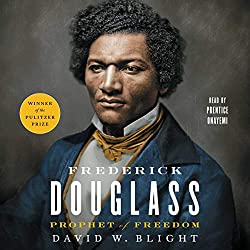
Perhaps the most significant work I read (or had read to me via audiobook actually) this year was the Pulitzer Prize winning Frederick Douglass: Prophet of Freedom by David Blight, read by Prentice Onayemi. What a work of scholarship! What an amazing life! I will be contemplating the facets of that biographical diamond for many years to come.

I also read two very different memoirs: A Promised Land by former President Barack Obama which chronicles his experiences from the period just before his election up to the death of Osama bin Laden and Where the Light Fell by Philip Yancey which tells the complicated story of the fundamentalist legalism and ugly bigotry of his Southern religious upbringing and Yancey’s unlikely discovery of the amazingness of grace. It’s interesting to me, looking back, to realize how much the ongoing fight against racism figured into these three life stories. 

Other Rewarding Reads

For my work, the kind of thing I read the most were commentaries on the Psalms. In a future post, I’ll try to explain which ones I found the most helpful as I preached through almost a third of the Psalter in 2020-2021. 

Heather Joy has fibromyalgia, and this year I became intent on understanding better both (1) what that is and (2) how to walk with my wife through it. I found the Mayo Clinic Guide to Fibromyalgia by Andy Abril and Barbara Bruce to be helpful for the first and The Fibro Manual by Ginevra Liptan to be best for the second.

The silliest thing I read in 2021 was probably The Quintessential Grooming Guide for the Modern Gentleman by Capt. Peabody Fawcett RN (who I believe to also be entirely fictitious), but it was fun to read in conjunction with sporting the longest (and greyest) beard I have ever grown.

I have the sweet privilege of serving as the book review coordinator for the EFCA Blog which puts me in touch with even more great books and insightful church leaders to review them. This year we published thoughtful reviews of Help! I’m Married to My Pastor by Jani Ortlund, Handle With Care by Lore Ferguson Wilbert, Embodied by Preston Sprinkle, and Reading the Times by Jeffrey Bilbro.

And that’s just scratching the surface. This year I discovered the work of Hannah Anderson (I read All That’s Good and anticipate reading many more), Thaddeus Williams (I read Confronting Injustice without Compromising Truth and look forward to hearing him in person at our EFCA Theology Conference in February), and John Onwuchekwa (I read Prayer: How Praying Together Shapes the Church with our church’s elders). I also swallowed Jesus the Great Philosopher by my former classmate Jonathan Pennington almost whole. It was a great year for reading.

Books By Friends

This year I got to read three books written by real-life friends:

In October, Alejandro Mandes published Embracing the New Samaria. I’m glad that Alex finally distilled his thinking into a readable little manifesto for Christians to open our eyes to the multi-ethnic future of both the United States but especially to the church of the eschaton.

Our friend Katie Faris has written He Will Be Enough: How God Takes You by the Hand Through Your Hardest Days (foreword by Joni Eareckson Tada) which is slated to be released in the Spring. This November, I got to read a pre-publication version and offer my official endorsement. Katie’s newest looks to be a beautiful book overflowing with the precious truth of God’s sufficiency. I’ll be handing out copious copies when I get them in my hands.

And lastly, the EFCA Spiritual Heritage Committee of which I am a member, has just finished a full revision of Evangelical Convictions: A Theological Exposition of the Statement of Faith of the Evangelical Free Church of America. When the conference revised Article 9 of our doctrinal statement in 2019, we set out to not only update the chapter on the Return of Christ (surveying the now broader set of acceptable views on the millennium and emphasizing the glorious character of our Lord’s second coming) but also to improve the whole thing. So this Fall, I got to re-read the work of my fellow committee members and provide (hopefully good) suggestions for bettering the second edition. It’s off to the printer right now, and I look forward to EC2 helping to strengthen another generation of church leaders in the EFCA.

I know that I am blessed to get to do so much reading, and I look forward to what rich things I may be allowed to explore in 2022. Tolle lege!

Thursday, December 30, 2021

Books I Read in 2021

Matt’s Books Completed* in 2021:
1. The Glass Hotel by Emily St. John Mandel
2. Hercule Poirot: The Complete Short Stories by Agatha Christie
3. The Thirteen Gun Salute by Patrick O’Brian
4. The Quintessential Grooming Guide for the Modern Gentleman by Capt. Peabody Fawcett RN.
5. In The Presence of My Enemies by Dale Ralph Davis
6. The Nutmeg of Consolation by Patrick O’Brian
7. The Guardians by John Grisham
8. Jesus the Great Philosopher by Jonathan Pennington
9. Confronting Injustice without Compromising Truth by Thaddeus Williams
10. Anxiety: A Student’s Guide by Edward Welch
11. Mayo Clinic Guide to Fibromyalgia by Andy Abril and Barbara Bruce
12. Trent’s Last Case by E.C. Bentley
13. Whose Body? by Dorothy L. Sayers
14. The Truelove by Patrick O’Brian
15. The Wine-Dark Sea by Patrick O’Brian
16. Handle With Care by Lore Ferguson Wilbert
17. The Commodore by Patrick O’Brian
18. The Yellow Admiral by Patrick O’Brian
19. Woe to the Scribes and the Pharisees by Daniel Taylor
20. Clouds of Witness by Dorothy L. Sayers
21. The Hundred Days by Patrick O’Brian
22. Rainbow’s End by Ellis Peters
23. Trinity Psalter Hymnal by the Joint Venture of the OPC & URCNA
24. Embodied by Preston Sprinkle
25. A Question of Belief by Donna Leon
26. Blue at the Mizzen by Patrick O’Brian
27. 10 Questions Every Teen Should Ask (and Answer) About Christianity by Rebecca McLaughlin
28. By Its Cover by Donna Leon
29. Everything Sad Is Untrue by Daniel Nayeri
30. Anxious People by Fredrik Backman
31. 21 by Patrick O’Brian
32. Unnatural Death by Dorothy L. Sayers
33. The Shepherd’s Life by James Rebanks
34. Beastly Things by Donna Leon
35. Trent Intervenes by E.C. Bentley
36. Looking for the King by David C. Downing
37. All That’s Good by Hannah Anderson
38. Political Thought: A Student’s Guide by Hunter Baker
39. The Fibro Manual by Ginevra Liptan
40. Trent’s Own Case by E.C. Bentley & H. Warner Allen
41. A Time for Mercy by John Grisham
42. Simply Trinity by Matthew Barrett
43. Embracing the New Samaria by Alejandro Mandes
44. Britte-Marie Was Here by Fredrik Backman
45. The Unpleasantness at the Bellona Club by Dorothy L. Sayers
46. Reading the Times by Jeffrey Bilbro
47. Evangelical Convictions, 2nd Edition. EFCA Spiritual Heritage Committee
48. Where the Light Fell by Philip Yancey
49. Cannabis and the Christian by Todd Miles
50. Edith Pargeter: Ellis Peters by Margaret Lewis
51. And Every Morning the Way Home Gets Longer and Longer by Fredrik Backman
52. He Will Be Enough by Katie Faris
53. The Trinity: An Introduction by Scott Swain
54. The Jewels of Paradise by Donna Leon
55. The Secular Creed by Rebecca McLaughlin
56. Camino Winds by John Grisham
57. Strong Poison by Dorothy L. Sayers
58. Prayer by John Onwuchekwa
59. Frederick Douglas: Prophet of Freedom by David W. Blight
60. Is Christmas Unbelievable? by Rebecca McLaughlin
61. Trace Elements by Donna Leon
62. A Promised Land by Barack Obama
63. The Lincoln Highway by Amor Towles
64. The Christian Standard Bible, M’Cheyne Reading Plan 


* As I say every year--these are books I finished reading (or had read to me in Audible) this year, not the ones I started or the ones I didn't get done. That list would be a LOT longer (and kind of depressing)! I read a bunch of them for escapist fun, a few for/with my family, and a lot of them just to learn and grow. They aren't listed (perfectly) in the order I read them. Some of them I am reading for a second or third time (or more!).

And as I also say each and every year--I'm not endorsing these books just because they are listed here.! Some of them are really good and some are really bad. Most are somewhere in between. Read with discernment.

Here's the article where I explain why I post these.


Lists from previous years:

2020
2019
2018
2017
2016
2015
2014
2013
2012
2011
2010
2009
2008 (first half, second half)
2007 (first half, second half)
2006 (first half, second half)
2005 (first half, second half)

Wednesday, February 05, 2020

An Interview with Tim Shorey about “Respect the Image”

My new friend, Tim Shorey, has a new book out today, Respect the Image: Reflecting Human Worth in How We Listen and Talk.

I was recently introduced to Tim through our mutual friend Katie Faris who told me about his writings on healthy communication between humans, and P&R Publishing sent me an advanced copy to read.

Is there a more pressing need in society today than respectful communication between God’s image-bearers? As I’ve been reading Respect the Image, I have appreciated Tim’s pastoral approach to teaching biblical principles–gracious yet unbending, gentle and firm. He practices what he preaches by speaking the truth in love. Tim has a wry, self-deprecating sense of humor and uses it to illustrate his shortcomings (and personal growth) in this arena of the tongue.

One of the reasons I wanted to read Respect the Image was to prepare my heart for the 2020 election season especially for the coming onslaught on social media. It’s going to be a difficult year to be a Christian online. It is so easy, way too easy, to see people whom we disagree with as not just our opponents or even our enemies but as less-than-human and therefore unworthy of even basic respect. Everything Tim says in this book applies to the political arena.

As I’ve been turning the pages, however, I have been even more struck by how Respect the Image makes a great counterpart to my own book, Resisting Gossip. It explores the flipside of gossip, the “instead of” dynamic that I tried to emphasize throughout my book. We aren’t only supposed to “put off” sinful speech but “put on” the godly kind.

Earlier this week, I had a chance to connect with Tim and ask him some questions about his brand new book:

Matt: Why did you want to write a book on this? What from your own life experiences brought you to the place of writing on communication?

Tim: Respect the Image emerged from a life full of relationships—childhood with five siblings, 42 years of married life, six children, 13 grandchildren, 38 years of pastoral ministry, a church of 250 people consisting of 25 different ethnicities, and over 15,000 hours of pastoral counseling. Early on I realized that the most frequent personal,  pastoral, and counseling needs I faced were my own, and my people’s, need to learn more about God, more about the gospel, and more about communication; in that order. This all drove me to study biblical principles of communication in earnest—for my family, my flock and my world needed these truths both taught and practiced. This then gave birth to the basic structure and outline of Respect the Image. Further motivated by a desire for these principles to be called readily to mind in conflict and other situations I developed the acrostic format of the book and various other memory helps the book includes. All that said, I certainly would want my readers to know that these truths impacted me long before they ever got into book form. Now my hope is that they will leave a mark more widely than ever before.

Matt: What is the image of God and why should we be respecting it in others?

Tim: As any theologian would tell you, that’s a tough question to answer, since the answer is multi-layered. It involves  our being created to represent God’s rule on the earth—as Genesis 1 shows. While it normally might include the capacity to reason, to communicate, and to relate, it doesn't always do so, since there are some precious human beings who do not have such capacities; at least not to the same degree as others. I believe it is a deep mysterious reality in which every person has the mark and imprint of God upon him or her (along with a capacity to relate to him) —and is thereby stamped with dignity and value. I cannot define it well, but it is there for all to see whenever we look intently into each and every human face.

Matt: How does your book relate to the subject of my book? What principles in RTI would help a follower of Christ to resist gossip?

Tim: At its very core Respect the Image teaches that because each person is made in the image of God, we cannot communicate badly or sinfully or disparagingly with or about others without insulting the image they bear. Gossip is the great evil it is primarily because it demeans, disrespects, and destroys others; others who are to be held in high honor since they are made in the image, redeemed with precious blood, and destined for immortality. I dare not slander or gossip, because in so doing I slander God. This truth—and its force in countering gossip—is played out in numerous applications throughout the book. Gossip is the antithesis—the polar opposite—of the respect for, the celebration of, the attention to, the understanding of, and the charitable judgment toward, others to which the Bible calls us, and which my book tries to address. Where these truths rule in the heart a guard will stand watch over the tongue to ensure that the only words that come out are words calculated to bless, to nourish, and to honor. Gossip dies a certain—even if all-too-slow—death when respect prevails. No doubt it goes without saying that this is easier said than done. James let’s us know how hard it is. But if we ask for the wisdom from above and commit to honor the image, communication transformation can happen; and the results are wonderful!

Thank you, Tim, for your time and your labor love in producing Respect the Image. I pray that it helps many to reflect our Creator as we talk to and about those made in His likeness.

Monday, December 28, 2015

Books I Read in 2015

Proof that I'm still a bibliophile (in case anyone was wondering).

Matt’s Books Completed* in 2015:

1. Funeral of Figaro by Ellis Peters
2. The Edge of the Dark Sea of Darkness by Andrew Peterson [Review]
3. God King by Joanne Williamson
4. The Horn of Roland by Ellis Peters
5. Live Like a Narnian by Joe Rigney
6. The Great Turkey Walk by Kathleen Karr
7. Scorpion Mountain by John Flanagan
8. Most Loving Mere Folly by Edith Pargeter (Ellis Peters)
9. What Is Marriage by Sherif Gergis, Ryan T. Anderson, and Robert George [[Review, Top Books of 2015]
10. Whose Body? by Dorothy L. Sayers
11. Four Blood Moons by John Hagee
12. A 30-Day Hunt for Faith by Steve Sorensen [Review]
13. The Trinity Cat and Other Mysteries by Ellis Peters
14. The 13 Culprits by Georges Simenon
15. Flame Over Tara by Madeleine Polland
16. Never Pick Up Hitchhikers by Ellis Peters
17. The Fatal Tree by Stephen Lawhead
18. Spurgeon’s Sorrows by Zack Eswine [Review, Top Books of 2015]
19. The Heist by Daniel Silva
20. North or Be Eaten by Andrew Peterson [Review]
21. A Young Man After God’s Own Heart by Jim George
22. The Great and Terrible Quest by Margaret Lovett
23. Being Mortal by Atul Gawande [Review]
24. #ReformingSocialMedia by Mandy Hoffman [Review]
25. The Eighth Champion of Christendom by Edith Pargeter
26. Unnatural Death by Dorothy Sayers
27. A Soldier of the Great War by Mark Helprin
28. I, Juan de Pareja by Elizabeth Borton de Trevino
29. A Colder War by Charles Cumming
30. The Monster in the Hollows by Andrew Peterson [Review]
31. Reluctant Odyssey by Edith Pargeter
32. Risen by Steven Mathewson [Third Year in a Row]
33. Master and Commander by Patrick O’Brian
34. Post Captain by Patrick O’Brian
35. Side by Side by Ed Welch [Review, #1 Top Book of 2015]
36. Aspergirls by Rudy Simone
37. Am I Called? by Dave Harvey
38. Who on Earth Is the Holy Spirit? by Tim Chester and Christopher de la Hoyde
39. Loving My Children by Katie Faris [Review, My Interview with the Author]
40. H.M.S. Surprise by Patrick O’Brian
41. The Mauritius Campaign by Patrick O’Brian
42. The Unpleasantness at the Bellona Club by Dorothy L. Sayers
43. Desolation Island by Patrick O’Brian
44. The Fortune of War by Patrick O’Brian
45. The Silent Speaker by Rex Stout
46. Might As Well Be Dead by Rex Stout
47. The Surgeon’s Mate by Patrick O’Brian
48. The Ionian Mission by Patrick O’Brian
49. Treason’s Harbor by Patrick O’Brian
50. Nerdy, Shy, and Socially Inappropriate by Cynthia Kim
51. The Shakespeare Stealer by Gary Blackwood
52. The Far Side of the World by Patrick O’Brian
53. The Reverse of the Medal by Patrick O’Brian
54. The Letter of Marque by Patrick O’Brian
55. The Thirteen Gun Salute by Patrick O’Brian
56. The Nutmeg of Consolation by Patrick O’Brian
57. The Truelove by Patrick O’Brian
58. The Wine-Dark Sea by Patrick O’Brian
59. Becoming Worldly Saints by Michael Wittmer [Review, Top Books of 2015]
60. The Commodore by Patrick O’Brian
61. The Yellow Admiral by Patrick O’Brian
62. The Hundred Days by Patrick O’Brian
63. Blue at the Mizzen by Patrick O’Brian
64. By Firelight by Edith Pargeter
65. What’s Your Worldview by James Anderson  [Review, Top Books of 2015]
66. Church Elders by Jeramie Rinne [Review]
67. The Warden and the Wolf King by Andrew Peterson [Review]
68. Hurricane Sa’ar by Daniel S. King
69. The Lily Hand by Edith Pargeter
70. A Means of Grace by Edith Pargeter
71. The Pastor’s Guide to Fruitful Work and Economic Wisdom edited by Drew Cleveland and Greg Forster
72. Gambit by Rex Stout
73. Dead Petals by Eric Ortlund [Review]
74. A Grief Observed by C.S. Lewis
75. Saturate by Jeff Vanderstelt [EFCA Now Reviews]
76. Jungle Doctor Spots a Leopard by Paul White
77. Still Life by Louis Penny
78. Dead Line by Chris Ewan
79. Every Good Endeavor by Timothy Keller
80. God Gave Wine by Kenneth Gentry, Jr.
81. The Hidden Treasure of Glaston by Eleanore Jewett
82. Thriving in Babylon by Larry Osborne
83. Truth Overruled by Ryan Anderson
84. After Acts by Bryan Litfin [Review]
85. Stop Your Complaining by Ronnie Martin [Review]
86. Seven Pressing Questions by Bill Kynes [Review]
87. Warfare Accomplished by Edith Pargeter
88. God at Work Gene Veith
89. A Family Affair by Rex Stout
90. If Death Ever Slept by Rex Stout
91. 3 at Wolfe’s Door by Rex Stout
92. Please Pass the Guilt Rex Stout
93. Go Set a Watchman Harper Lee
94. God Made All of Me by Justin and Lindsey Holcomb [My Interview with the Authors]
95. The Biggest Story by Kevin DeYoung [Made it into this sermon!]
96. The NIV One Year Bible


* These are books I finished reading in 2015, not the ones I started or the ones I didn't get done. I read a bunch of them for escapist fun, some for/with my kids, and a lot of them just to learn and grow. This year because of my illness, I lost track a couple of times and had to reassemble them later, so the order is a little off.

As I say each and ever year--I'm not endorsing these books just because they are listed here. Some of them are really good and some are really bad. Most are somewhere in between. Read with discernment.

[Here's the article where I explain why I post these.]

Previous Years:

Friday, June 28, 2019

Unexpected

Katie Faris (whose new blog I mentioned yesterday) has a new article up today at "Her View from Home" about what she wasn't expecting when she was expecting and what she found instead.

Read: Motherhood By Faith

Sunday, May 21, 2006

The Great Mitchell 2006 Eastern PA/South Jersey Vacation

Day #1: We drove to Cherry Hill New Jersey and got to hold a newborn baby of our friends Scott & Katie Faris. We set up shop at the Cherry Hill Holiday Inn. All the kids in one room and all the adults (Heather's folks flew in that night from Western Canada) in another.

Day #2: America's First Zoo in the morning and the pool in the afternoon. It's a good thing we had an adult for each child.


Day #3: The historic Strasburg Railroad near Lancaster, PA.


Then we drove north and east to the beautiful Lafayette Inn in Easton, PA.

Day #4: We got to enjoy a delicious breakfast before heading to the Crayola Factory for a crayon extravaganza!

And, did I mention that we got to enjoy some playgrounds?


A good time was had by all!

Sunday, May 07, 2006

Matt Messages - Time to Grow

“Time to Grow”
May 7, 2005
2 Peter 3:18

“But grow in the grace and knowledge of our Lord and Savior Jesus Christ. To him be glory both now and forever! Amen.”

Lord willing, this will be our last transitional week before we begin a new series of messages. And I would appreciate your prayers for LeRoy Glover as he prepares to bring the message next weekend and for me as I prepare our next sermon series.

I began last week’s sermon by telling you the story of a street person named Chuck who accosted me for the Gospel one day at Moody Bible Institute in Chicago. He wanted to get together with God.

Chuck needed the Gospel like a thirsty man needs water! Have we made any progress this week in our attempts to love the Gospel, pray for the Gospel, and share the Gospel? I hope so. I found myself a few more times this last week being motivated to share the Gospel with others. I hope you have, as well.

Well, just across the plaza from where I talked with Chuck, was a huge stone engraving of 2 Peter 3:18. And whenever I think of this verse, I think about that engraving, larger than a person, on the wall of Culbertson Hall. I used to read it every time I went into and out of my dorm. And it has stuck with me. Something of theme verse for me.

When Kathy Moore was creating our worship banners for this auditorium, she asked me for Scripture texts to include throughout the room. And one of the first ones to jump to my mind was 2 Peter 3:18. It’s right here on the wall behind me. “But grow in the grace and knowledge of our Lord and Savior Jesus Christ. To him be glory both now and forever! Amen.”

[prayer]

It’s “Time to Grow.”

Our Lord does not want us to stagnate.
Our Lord does not want us to be stunted.
Our Lord does not want us to stay where we are.

He wants us to grow.

It’s Time to Grow.

I’ve mentioned the last few weeks a few of my pastoral concerns for our church. The first was that we learn to humbly and happily give and receive godly counsel. The second was that we grow in gospel boldness. Today, I want to encourage us all to be
growing Christians.

God does not just save us and then leave us where we are.

He loves us right where we are, but He loves us too much to let us stay there.

He wants us to grow. 2 Peter 3:18

“But grow in the grace and knowledge of our Lord and Savior Jesus Christ. To him be glory both now and forever! Amen.”

Notice that this verse starts with a “but.” Most of 2 Peter has been full of warnings against false teachers and false teaching that threatens to unsettle, and if possible, unseat Christians. Chapter 3, for example, has been all about the second coming of Christ and how unbelievers scoff at the idea of Jesus’ return. And Peter has referred again and again to the Holy Scriptures as the way to not get unsettled or unseated because of the false teaching. Verse 17.

“Therefore, dear friends, since you already know this, be on your guard so that you may not be carried away by the error of lawless men and fall from your secure position. But...”

That is, instead of getting carried away, instead of falling from your secure position, instead of being unsettled and unseated “grow in the grace and knowledge of our Lord and Savior Jesus Christ. To him be glory both now and forever! Amen.”

It’s important to grow.
It’s a non-negotiable to grow.
It is not optional to grow.

Without growth we become unsettled and possibly unseated.

It’s time to grow.

Are you a growing Christian?

How do you know?

Well, what are we supposed to grow in?

In what ways are we supposed to grow? Verse 18 again.

“But grow in the grace and knowledge of our Lord and Savior Jesus Christ. To him be glory both now and forever! Amen.”

We are to grow in grace and grow in knowledge.

#1. Grow in Grace.

What does that mean?

Well first, notice that it is the grace...of our Lord and Savior Jesus Christ. This is God’s grace given to us in Jesus. It’s Jesus’ grace.

What is grace?

Grace is unmerited favor.

It is not getting what we deserve and getting what we do not deserve.

It is not getting the bad things that we have earned and is getting the good things–that we could never have earned–as a free gift.

That’s grace.

Salvation is a gift of grace.

Paul says, “it is by grace you have been saved, through faith–and this not from yourselves, it is the gift of God–not by works, so that no one can boast.”

Grace is the way that we get into the family of God. It’s the way that we get saved.

If you are saved today, it’s because of God’s free gift of grace.

If you are not yet saved today, God is offering His grace to you to receive by faith.

But grace is not just for us at the beginning of the Christian life. It is the road of the Christian life. It is the path that we walk on.

And we are to grow in it.

We are to grow in grace.

That means to understand the grace more.
It means to appreciate Jesus’ grace more.
It means to rely on Jesus’ grace more.
It means to appropriate more of Jesus’ grace.
It means to grow spiritually because of Jesus’ grace more and more.

Peter has been talking about growth in grace all the way through this letter. I should have started that beginning, but I wanted to get across what is at the end.

But in chapter 1, verse 3, Peter says “[God’s] divine power has given us [That’s grace!] everything we need for life and godliness through our knowledge of him who called us by his own glory and goodness. Through these he has given us his very great and precious promises, so that through them you may participate in the divine nature and escape the corruption in the world caused by evil desires. [That’s growth.] For this very reason, make every effort to add to your faith goodness; and to goodness, knowledge; and to knowledge, self-control; and to self-control, perseverance; and to perseverance, godliness; and to godliness, brotherly kindness; and to brotherly kindness, love. For if you possess these qualities in increasing measure [That’s growth!], they will keep you from being ineffective and unproductive in your knowledge of our Lord Jesus Christ.”

That describes growth in grace.

Spring time is a great time to talk about growth. Because you see it everywhere around you.

Trees are budding. Flowers are blooming. My grass is growing. I’d like to get around to cutting that, thankfully my father-in-law is coming for at two visit. Maybe he can do something about it!
But growth is all around us.

Are you growing in grace?

Last Mother’s Day, I bought Heather a flowering crab apple tree. It’s a little dinky thing with like a 3 inch trunk. Over the winter, you wonder whether or not it’s going to make it. But there are blooms on it this week, and it is definitely growing.

Those graces in chapter 1 are blooms that show us whether or not we are growing.

Faith, goodness, knowledge, self-control, perseverance, godliness, brotherly kindness, love.

Do you have flowers like that growing on you?

“If you possess these qualities in increasing measure, they will keep you from being ineffective and unproductive in your knowledge of our Lord Jesus Christ.”

I’m afraid that many Christians are ineffective and unproductive in their Christian lives.

It’s a major concern of mine that many Christians don’t seem to be growing.

Now, hear me. I’m not saying that you do these things to earn your salvation. No. This is based on grace. It’s growing in grace. The amazing, unmerited favor of the Lord based on nothing worthy inside of me.

But it is not optional.

We need to grow in grace.

Have you made progress in your Christian life?

Are you somewhere different with Jesus than you were a year ago?

Don’t compare yourself with someone else. It’s easy to look at another Christian and either get really proud or really down.

Compare yourself with where you have been and where you need to go–Christlikeness.

Have you made any progress?

Sometimes its leaps and bounds. Sometimes its baby-steps. And sometimes, it’s just still facing the right direction.

But we need to make progress. We need to grow.

Faith, goodness, knowledge, self-control, perseverance, godliness, brotherly kindness, love.

By the grace of God, I believe I’ve grown some in godliness these last two months. For my Prayer Class, I had to covenant with my professor to pray a certain amount of time each day from when the class ended to when my paper was turned in.

And getting to this level of prayer has been difficult for me. Especially on very full days–full of ministry and family responsibilities.

But I have grown some in my ability and discipline to pray. I can tell that I have–even though I am far from where I want and need to be.

Are you growing in grace?

Katie Faris had her baby this Thursday on my birthday! 8 lbs, 10oz, 21" long. That’s a pretty big baby. What if Elijah Faris was still 8 lbs, 10 oz, 21" long next May? There would be something wrong wouldn’t there?

Drastically wrong.

Some Christians are like that. They never get past infant stage. Peter calls them “nearsighted and blind and [have] forgotten that [they have] been cleansed from [their] past sins.”

It’s time to grow.

But Peter says, “If you possess these qualities in increasing measure [if you grow!], they will keep you from being ineffective and unproductive in your knowledge of our Lord Jesus Christ.”

Notice how Peter connects grace with knowledge. He does that at the beginning of the letter and again at the end where we are studying. Chapter 3, verse 18.

“But grow in the grace and knowledge of our Lord and Savior Jesus Christ. To him be glory both now and forever! Amen.”

We are to grow in grace and knowledge.

We are to grow in knowledge.

But this is not just knowledge about something.
It’s knowledge OF something.

Personal acquaintance with the subject.

And the subject here is a person.

This is knowledge of Jesus.

#2. We are to grow in knowledge of Jesus.

“But grow in the grace and knowledge of our Lord and Savior Jesus Christ.”

Notice that this is not just information, not just data-gathering about Jesus.

This is a growing knowledge OF Jesus.

This is personal.

Jesus is a person and we are to grow in our knowledge of this person–personally.

Around here, we use the catch-phrase “a love relationship with Jesus Christ.”

That’s what we are to grow in. Knowing Jesus better.

That was Paul’s desire, was it not?

“I consider everything a loss compared to the surpassing greatness of knowing Christ Jesus my Lord, for whose sake I have lost all things. I consider them rubbish, that I may gain Christ and be found in him, not having a righteousness of my own that comes from the law, but that which is through faith in Christ–the righteousness that comes from God and is by faith. I want to know Christ and the power of his resurrection and the fellowship of sharing in his sufferings, becoming like him in his death, and so, somehow, to attain to the resurrection from the dead” (Philippians 3:8-11).

“[G]row in the grace and knowledge of our Lord and Savior Jesus Christ.”

Are you growing in your knowledge of Him?

Do you know Him better now than you did a year ago?

Now, you can’t do that without your Bible.
You can’t do that without learning about Jesus in your Bible.

But just learning facts about Jesus in your Bible doesn’t do it either.
You have to meet Jesus over and through your Bible.

“[G]row in the grace and knowledge of our Lord and Savior Jesus Christ.”

Let’s just take a few minutes and meditate on Jesus’ name and titles here in this verse.

First, notice that He is “our” Jesus.

“[G]row in the grace and knowledge of our Lord and Savior Jesus Christ.”

We belong to Him. He is ours. Not that we own Him, but that we are owned by Him.

We belong to Jesus.

And belong to Him together. He’s not just “my” Lord and Savior.

He’s “our” Lord and Savior.

There is a community aspect to growth in grace and knowledge.

We grow together!

Are you linked with other Christians to grow together?

Some people think that they can be “Lone Ranger Christians” who do spiritual growth without community, without fellowship, without the rest of the Body. But the Bible doesn’t recognize anything like that.

We need each other. That’s why we have created ministries like Sunday School, Prayer Meeting, and Link Groups.

We grow together. Because He’s “our” Savior. Yes, He’s “my” Savior. But He’s not just mine. He’s “ours.”

Are you growing together with others in community?

Second, notice that He is called “Lord” here. “[G]row in the grace and knowledge of our Lord...”

Lord means Master.
It means King.
It means Sovereign.
It means Boss.

It means that He is in control and in charge.
Whatever He says goes.

And His Lordship is not to be divorced from His Saviorhood.

Sometimes, we get to thinking that we can just be saved by Jesus and then live any old way we want.

But He is not just our Savior. He is our Lord. He’s in charge.

We need to do things, His way.

I’ve noticed in 8 years of pastoral counseling, that most problems in people’s lives (and also my own) come down to a failure in Lordship. A failure to recognize and submit our lives to the Lordship of Jesus Christ.

He says one thing and we disagree and we go our own way.

And there is only danger in that direction.

We teach our children, “With obedience comes blessing, but with disobedience comes danger.”

Jesus said in Luke 6:46, "Why do you call me, 'Lord, Lord,' and do not do what I say?” The very definition of following Jesus as Lord is doing what He says.

Are you growing in your knowledge of Jesus AS LORD?

Or are there areas of your life that remain un-submitted to the Lordship of Christ?

But, third, He is not just Lord. He is also Savior. V.18 again.

“[G]row in the grace and knowledge of our Lord and Savior Jesus Christ.”

Jesus is our Savior.
He is our Rescuer.
He is our Redeemer.

We need to grow in our knowledge of His saving work.

That’s more of what we talked about last week in not moving from the Gospel and growing deeper in love with the Gospel.

It’s knowing the Savior and knowing better what He has accomplished on our behalf.

I make no apologies for making the Main Thing the Main Thing again and again. If you are tired about hearing about the Cross and the glorious Gospel of grace, then you are in the wrong church with the wrong pastor.

We can’t talk about it enough. Certainly, we need to talk about it in new and fresh ways and see how it applies to every single thing in the world, but we need to be Cross-Centered.

We need to grow in our knowledge of Jesus as Savior.

That’s one of the chief reasons why we eat and drink at the Lord’s Table.

We are reminding ourselves of Jesus’ great rescuing sacrifice.

And we take this time to commune with Him and thank Him for what He did for us–the victory He gained on that Cross. We commune with Him as Savior. That’s why this is called “Communion.”

God uses the Table in our lives to grow us in our knowledge of Jesus as Savior.

That’s what His name “Jesus” means. #4.

The angel that came to Joseph in Matthew chapter 1 said, "Joseph son of David, do not be afraid to take Mary home as your wife, because what is conceived in her is from the Holy Spirit. She will give birth to a son, and you are to give him the name Jesus, because he will save his people from their sins."

The name “Yeshua” means “God saves.”

And that’s what Jesus was doing on that Cross.

He was saving!

Are you growing in your knowledge of Jesus as Savior?

Are you trusting Him more?

That’s what I think of when I see that name, “Christ.” #5.

“[G]row in the grace and knowledge of our Lord and Savior Jesus Christ.”

“Christ” is the Greek word for the Hebrew word “Messiah.”

It means “anointed one” and it refers to the great deliverer promised in the Old Testament.

Jesus’ coming as the Christ was the fulfillment of all of God’s great Old Testament promises.

Paul says that every promise that God has ever made is “Yes in Christ.”

When we see that word Christ, we should think “Promise Kept.”

And we should trust Him all the more.

Are we growing in our knowledge of Jesus as the great PromiseKeeper?

What specific promises of Scripture are you using right now to grow in?

I’ve begun working on James 4:8. “Come near to God, and He will come near to you.” I need to remind myself of that as I go to prayer.

“Come near to God, and He will come near to you.”

What specific promises of Scripture are you using right now to grow in?

Paul says “For no matter how many promises God has made, they are "Yes" in Christ.”

Are you growing in your knowledge of Jesus as Christ?

Notice where all of this growth leads. It leads to glory.

And not glory for ourselves that we have done so much growing.

No, growth in grace always leads to glory for God. Because it is grace that is accomplishing all the hard work. V.18

“But grow in the grace and knowledge of our Lord and Savior Jesus Christ. To him be glory both now and forever! Amen.”

That’s the end goal of all of our growth in grace and knowledge–that God would be glorified.

That’s why our purpose statement says we exist to glorify God by bringing people into a love relationship with Jesus Christ.

We exist to help people grow in the grace and knowledge of Jesus.

So are you growing?

It starts by putting your trust in Jesus as your Savior and Lord and becoming a Christian.

You can’t grow if you haven’t started a new life.

And the One who poured out His life for sinners like you and me invites you to trust in Him and what He did on your behalf on the Cross.

He invites you put yourself in His hands and be saved from your sins.

And if you are a Christian, He calls you to grow.

It’s time to grow.

We can’t be complacent, infant Christians, no different now than when we first came to Christ.

It’s time to grow.

It’s time to grow in grace.

Knowing better the unmerited favor of Jesus.

Understanding His grace.
Appreciating His grace
Relying on His grace.
Appropriating His grace.
Growing spiritually because of Jesus’ grace more and more and more.

Faith, goodness, knowledge, self-control, perseverance, godliness, brotherly kindness, love.

And growing our knowledge of Jesus.

Together (our), Lord and Savior Jesus Christ.

It’s time to grow.

“To him be glory both now and forever! Amen.”

Sunday, November 08, 2015

[Matt's Messages] "Your Attitude at Work"

“Your Attitude at Work”
Working for the Lord - Fall 2015
November 8, 2015 :: Philippians 2:1-30 

Our current sermon series is called “Working for the Lord,” and it’s about what people do all day. Our callings, our careers, our jobs, our work.

We’ve learned about diligence and laziness, and witnessing on the job, and balancing work and rest, and discerning our callings, and the effects of the curse, and why we work, and last week was about prayer at work.

And every week has been about reminding ourselves whom we work for. We are working for the Lord. “It is the Lord Christ you are serving.”

And today I want for us to think together about how that affects our attitude at work.

Today’s sermon title is: “Your Attitude at Work”

What should be a Christians’ attitude when we are working?

If Jesus is my true boss, what should be my attitude when I’m doing my job?

And by attitude, I mean, not so much your mood but your mindset.

We can’t always change our moods, but we can and should choose and change our perspectives, our mental postures, our mindsets.

How we think and then act on the job.

So, we’ll ask the question about our last week:

What has been your attitude at work this last week?

Isn’t it great how directly applicable each of these messages has been in this series?

We get the lecture on Sunday and then immediately the lab on Monday through Friday.

What has been your attitude at work this last week?

No matter who you are, no matter what your job is (butcher, baker, candlestick maker, retired person or second grader) what has been your attitude about and at your work this last week?

Was this you this week?

“Whistle while you work!”

Or was this you?

Good old. “Grumpy.”

Or something in between? Or both at some point or another?

I think I was this one or this one this week. "Sleepy" or "Dopey." I was just run ragged this week and felt like I was all dopey and running through a fog.

What has been your attitude at work this last week?

This is challenging, isn’t it?

What kind of an attitude, what kind of mind-set, should a Christian working worshiper  have?

Philippians chapter 2.

We’re going to read the whole chapter this morning, in the course of this message, and there is so much here that we are not going to get a chance to talk about.

The last time I preached through Philippians, I took four weeks to do this one chapter, and today we’re going to do the whole thing in one message. So, we’re going to focus in on just a few big details.

The apostle Paul is writing to the Philippian church from prison.  He cannot be with them right now though he longs for them with all of his guts.  He wants to help the Philippian church deal with the problems that they are now experiencing.

The Philippian church is experiencing opposition to the gospel on the outside of the church and some strife among leaders on the inside of the church. Opposition to the gospel on the outside and interpersonal wrangling on the inside. In chapter 1, Paul told the Philippians that they need to fearlessly fight together for the faith of the gospel, presenting a united front against the opposition on the outside.

And now in chapter 2, he turns to emphasize what needs to happen on the inside of the church. How these Christians should lovingly relate to one another.

So the first application of these words is to our relationships within the church, but I’m also sure that they relate to our attitude on the job, as well.

What should be our attitude at work?

#1. CHRISTLIKE HUMILITY AND SERVANTHOOD.

Verse 5 says it all, “Your attitude should be the same as that of Christ Jesus.”

Yes, Jesus is your true boss, but He is also your true example of how to be a worker.

You and I should get our clues of how to adjust our attitudes by looking at the example of Jesus Christ.

But before we get to verse 5, Paul starts the chapter with an appeal to the Christians a Philippi to be loving and unified.  And he does it by reminding them of the blessings of being a Christian.

Did you catch those if/then statements?

V.1 “If you have any encouragement from being united with Christ, if any comfort from his love, if any fellowship with the Spirit, if any tenderness and compassion...”

Do you have those things?

Oh yes. All Christians do! It’s not really asking if they have them but saying that since they have those things then (verse 2), “make my joy complete by being like-minded, having the same love, being one in spirit and purpose.”

Paul is saying that if you have the blessings, the benefits of the gospel, then the proper response of your life is to be loving to other Christians.

And that love looks like humility and servanthood. V.3

“Do nothing out of selfish ambition or vain conceit, but in humility consider others better than yourselves. Each of you should look not only to your own interests, but also to the interests of others.”

If we all did that, how might that revolutionize our work?

Now, again, the first application is to the church. Only Christians can be truly like-minded and have the same love, being one in spirit and purpose.

But those Christians also go to work in the rest of the world and verse 4 applies to all of us there, as well.

“Do nothing out of selfish ambition or vain conceit.”

Don’t show up for work out of selfish ambition.
Ambition is not wrong but if it’s all self-centered it will be wrong.

And vain conceit is thinking that everything is about you.

Unflattering selfie while preaching this message.
Is your work-life all about you?

We live in a selfie-culture where the subject of more pictures than ever before is ourselves.

It used to be that you took pictures of other people and other things.

But now our culture is obsessed with taking pictures of ourselves.

Is it wrong to take a picture of yourself. No. But what does it say about our society when that’s the main thing that many people are photographing?

We live in a selfie-culture at work, as well. We are always looking out for number one.

Not just climbing the ladder but pushing people off of it to climb faster.

That’s the way of the world but it should not be our attitude. V.3

“Do nothing out of selfish ambition or vain conceit, but in humility consider others better than yourselves. Each of you should look not only to your own interests, but also to the interests of others.”

I guess we call that being a team player, but that doesn’t sound as powerful as verse 4 does.

Everybody looks out for their own interests. That’s not wrong. But a Christ-follower looks out for other people’s interests, as well.

And that could be your co-workers. Are you doing what is in the best interest of your co-workers each day?
Or it could be your customers. Are you trying to pull a fast one on them? “Let the buyer beware!”
Or it could be your employer. Are you looking out, not only for what works for you but what would be best for them?
Or it could be your employees. Are you regularly doing what is best for them, not just for you?

Do you see how revolutionary this attitude is?

Does the world work like that?

Not normally.

But because WE have the benefits of verse 1 we can act differently than the world.

We can be humble because we are loved.

Humility considers others better than (or more important than) yourself.

Not better in worth.  But better in care.  In attention.  In service.  Better in importance.

It means putting other people first.

This principle is in basic contradiction to our world’s value system but it is the foundation of value system of the kingdom to come.  The last shall be first and the first shall be last.  What does it profit a man if he gains the world but lose his soul?

Self-denial. And looking out for others’ interests.

What could you change in your work flow this week to make sure that you are living out verse 4?

“Each of you should look not only to your own interests, but also to the interests of others.”

Now, that does not necessarily mean that you do your co-workers’ work for them if they are slackers.

And it doesn’t mean that you do everything you are asked to do at work, especially if it’s too much.

But it does mean that you are generous and want what’s best for everybody, not just yourself in your situation. Does that make sense?

Because we have the benefits of the gospel, we can go to work with an attitude of humility and servanthood.

And our Lord Jesus showed us how. V.5 again.

“Your attitude should be the same as that of Christ Jesus”

Again, attitude here means “mindset.” The 2011 NIV renders verse 5 as, “In your relationship with one another, have the same mindset as Christ Jesus.”

The same outlook. The same perspective. The same mental posture.

This is what you think. You think, “I’m going to be a servant.”

That’s what Jesus did. Verse 6.

“Who, being in very nature God, did not consider equality with God something to be grasped [He was fully God in every way but out of His humility, He didn’t hold onto the privileges of deity but emptied Himself (v.7),] but made himself nothing, taking the very nature of a servant, being made in human likeness.”

At Blair’s memorial service we talked about this.

Jesus did not come to be served but to serve.

And that’s the true measure of greatness. Not status, stuff, or success, however defined, but servanthood.

Jesus lowered Himself to became one of us and then took the lowest place ever. V.8

“And being found in appearance as a man, he humbled himself [further!] and became obedient to death–even death on a cross!”

And God rewards that. V.9

“Therefore God exalted him to the highest place and gave him the name that is above every name, that at the name of Jesus every knee should bow, in heaven and on earth and under the earth, and every tongue confess that Jesus Christ is Lord, to the glory of God the Father.”

We love verses 9-11, but Jesus had to go through verses 6-8 to get there.

And we need to follow His lead.

You could call this “downward mobility.”  Or just servanthood.

Christlike servanthood.

Jesus showed us how.

Is this your attitude at work? Are you on the hunt for those who you could serve?

I think that our administrative assistant here in our church office a great example of someone who follows Jesus’ model of humility and servanthood.

She always goes above and beyond to make sure that everyone is served.

Not just in the details but caring for the hearts.

I’m thankful for Marilynn Kristofits’ “administry.”

How about you?

Do you have servant-attitude or a “selfie-attitude?”

Only one of those leads to glory and reward.

Jesus was rewarded with the highest glory because He took the lowest place.

Those folks at work that are seeking their own vain glory, they might get ahead in the short run, but the fallout in the end will be spectacular (Ps 73).  Read Psalm 73 some time to see what will happen to those who are filled with self-ambition and pride.

Those of us who are united to Christ can humble ourselves like him and serve others around us in love.

Now in verse 12, Paul begins to apply this gospel further.  He starts with a “therefore.”

“Therefore, my dear friends [in Philippi], as you have always obeyed–not only in my presence, but now much more in my absence–continue to work out your salvation with fear and trembling, for it is God who works in you to will and to act according to his good purpose.”

So much I could say about that but don’t have time today.

Notice that we work OUT our salvation. We don’t work for it.

We live out the implications of our salvation with fear and trembling. With worship and awe that we are loved by a holy God and who gave His Son for us.

And we work out our salvation BECAUSE God is at work in our hearts on our wills.

We work because God is at work. There’s a lot to ponder there.

But I really want to get to verse 14 because there’s the attitude.

“Do everything without complaining or arguing, so that you may become blameless and pure, children of God without fault in a crooked and depraved generation, in which you shine like stars in the universe as you hold out the word of life–in order that I may boast on the day of Christ that I did not run or labor for nothing.”

#2. CHRISTLIKE CONTENTMENT AND THANKSGIVING.

Just think what would happen if we lived out verse 14 consistently.

“Do everything without complaining or arguing...”

Now, before you think about godly ways to complain (which there are some, read the psalms) or arguments that need to be made (which there are some, the Bible includes them, too)... but before you go there and qualify these statements, just agree that the world would be such a better place without complaining and arguing.

Amen?

These sins of grumbling are major problems for us in our wealthy consumeristic Western culture. Americans love to complain.

And after politics, work is probably the thing we love to complain about the most.

But grumbling is rotten to the core.

It is unholy discontentment with the way things are in God’s world.

Grumbling is complaining about how God is doing at ruling His own world.

Do you see how sinful that is?

My friend Ronnie Martin has just come out with a new book called Stop Your Complaining: From Grumbling to Gratitude.  Ronnie is the planting pastor of the church that Jeff Powell is a part of in Ashland, Ohio. And Ronnie is now serving as a volunteer church planting director for our district.

What I really like about Ronnie’s book is that he shows just how atrocious an attitude of complaining is for those who belong to Jesus.

If we have the things in verse 1, how could we get stuck in verse 14?

I highly recommend this book, especially during this season of Thanksgiving when for a whole month we say, “Jesus, Thank You.”

I have a copy you could borrow and the church library has one, too.

It’s kind of fun because this is the second book that I’ve gotten to endorse as an published author. It’s published by CLC my publisher, as well, and they asked me to say a word about it.

I said, “I didn't want to read this book because I knew that I needed to read it, but I'm glad I did. With both keen insight and dry wit, my friend Ronnie explores our all-too-common sinful tendency to grumble and offers grace-laced answers to our problem. You may not want to read Stop Your Complaining either, but you'll be glad you did.”

Now, I say this is the second book I got to endorse. The first one was Loving My Children by Katie Faris.

She also does a wonderful job of reminding us of what we have in Jesus so that we don’t complain about our day job, even if our day job includes cleaning up preschooler’s vomit.

“Do everything without complaining or arguing...”

King James, “Do all things without murmurings and disputings...”

English Standard, “Do all things without grumbling or disputing.”

Again, the first application of these words is towards the church. Do everything you do within the church family without grumbling about each other or picking fights.

But it also applies to our attitude at work.

Do you job without grumbling.

How do you do that?

Develop an attitude of gratitude, right?

Be thankful for what you have.

In Christ, you have everything and that should make all of the difference.

This does not meant that we never point out what is wrong at work.

It’s not turning a blind eye to problems or not trying to be a problem-solver.

But is not making the problems the focus of your heart.

And letting that spill over into bitter complaint that does nothing to help the people around you.

If you and the other Christians at your workplace stopped your griping and grumbling, would you stand out?

Paul says in verse 15 that we would stand out like stars in the universe!

We’ve had some beautiful starry nights recently, haven’t we?

Do you go out and look at that vast expanse and what stands out? The stars, right?

Paul says that if we purify ourselves of discontentment and grumbling we will stand out and people will want to know what’s different about us.

Like Ken Shimmel in Dan Kerlin’s story a few weeks ago.

He was whistling while he worked!

How could he do that? Because He was content with His true Boss.

If you know that Jesus is your Lord then you can be happy on the job.

Not happy about everything that happens there but happy in spite of everything that happens there.

And that’s going to give you opportunities to share the gospel. V.16

“...as you hold out the word of life...”

I think that for many of you, your strategy for talking about Jesus should be to not talk about Jesus until people say, “What is different about you? How can you be content and thankful at a time like this?”

“Why don’t you whine like the rest of us?”

Whining is the great American past-time.

Why don’t you do that? “Well, let me tell you about my Lord.”

Paul was staking his ministry on this.  He was counting on these Philippian believers to be so changed by the gospel that they would cut out their complaining and arguing. He was sure of it.  V.16

“...as you hold out the word of life–in order that I may boast on the day of Christ that I did not run or labor for nothing. [It was worth it.] But even if I am being poured out like a drink offering on the sacrifice and service coming from your faith, I am glad and rejoice with all of you. So you too should be glad and rejoice with me.”

Paul saw his work as worship!

And he thought he might be dying for the gospel at this time.

But he believed that the gospel was powerful enough to transform believers, to give them a new perspective, a new attitude and mindset for their lives.

Christlike contentment and thanksgiving is what it looks like to work out your salvation with fear and trembling.

How are you doing that? What needs to change in your attitude at work so that others see you as full of contentment and thanksgiving?

Paul ends this chapter with two examples of guys who lived out what he was preaching. Timothy and Epaphroditus. V.19

“I hope in the Lord Jesus to send Timothy to you soon, that I also may be cheered when I receive news about you. I have no one else like him, who takes a genuine interest in your welfare. For everyone looks out for his own interests, not those of Jesus Christ. [Does that sound familiar? Sounds like verse 4.] But you know that Timothy has proved himself, because as a son with his father he has served with me in the work of the gospel. I hope, therefore, to send him as soon as I see how things go with me. And I am confident in the Lord that I myself will come soon.”

Timothy had that servant attitude that Paul wants us all to have. V.25

“But I think it is necessary to send back to you Epaphroditus, my brother, fellow worker and fellow soldier, who is also your messenger, whom you sent to take care of my needs. For he longs for all of you and is distressed because you heard he was ill. Indeed he was ill, and almost died. But God had mercy on him, and not on him only but also on me, to spare me sorrow upon sorrow. Therefore I am all the more eager to send him, so that when you see him again you may be glad and I may have less anxiety. Welcome him in the Lord with great joy, and honor men like him, because he almost died for the work of Christ, risking his life to make up for the help you could not give me.”

Ephaphroditus had that servant attitude as well and probably that of contentment and thanksgiving. He was able to risk it all and think about others more highly than himself.

He was concerned about the Philippians even though it was he who had been sick.

Who is an example in your life that lives out these attitudes in their work?

Everybody knows somebody who just lives this out.

I think of Blair Murray. It’s no secret that we’re all grieving him still.

Blair was a servant. He had this attitude.  He was full of contentment and thanksgiving. And he put others first.

It’s right for us to remember that and to honor him. I love that about verse 29.  It calls upon us to honor people in the areas where they deserve it.

When people we know live out these principles, we should show them honor.

Today, I’d like to have all of those who serve in protective capacities to stand and be recognized.

We already had our veterans stand. They stood in harm’s way to protect us.

But on top of that I want to have all of those in corrections to stand. If you work is or was being a corrections officer or you work in the prisons or the boot camp. Or if you are a police-officer. Or a security guard. If Jeremy were here today, we’d have our police-academy cadet.

If your job is to protect people, I’d like to stand and be recognized and be honored.

Thank you!  We celebrate you today because I think your jobs might some of the hardest in the world to maintain a good attitude about.

Because you are constantly receiving negativity. So much is against you.

I can get to complaining about my life, but there is a whole month dedicated to pastor appreciation!

I don’t think there is a whole month when everyone tells people working in protective ministries what a great job they are doing!

Thank you for doing what is often thankless.

And for doing it, if you are a Christian, with a servant attitude.

With an attitude that says, “I am doing this for Jesus.”

And I am looking out for others not just for myself.

I think this area of attitude is a hard one for us.  Most of us can get some kind of a rhythm going between work and rest. Most of us do some praying for our jobs. Most of us want to witness at work.

But it’s hard to maintain a good attitude at work.

It is. It is difficult.

But it’s the right and righteous thing to do.

And it brings God the most glory.

And Jesus showed us how.


***

Messages in this Series

01. Working for the Lord
02. Is Work - Good Or Bad?
03. Why Work?
04. Working at Witnessing
05. Get to Work!
06. Work and Rest
07. Called to Work
08. Prayer at Work
09. Your Attitude at Work