Sunday, September 11, 2022

[Matt's Messages] “I the LORD Search the Heart”

“I the LORD Search the Heart”
Uprooted - The Words of Jeremiah
Lanse Evangelical Free Church
September 11, 2022 :: Jeremiah 17:1-27 

I don’t understand me.

I often don’t understand the workings of my own human heart.

How about you? Do you understand you?

I lie to myself, frequently. And then believe the lies!
I cheat myself.
I trick myself.
I deceive myself.

The last two weeks, we’ve asked the question, “What lies do you want to believe?” Because our own hearts often feed those lies to ourselves!

Sometimes, I find myself doing something bad, and I know I’m doing it. And I know that I chose to do it, but I don’t really understand how I got there. 

I’m not blaming anyone else. I’m blaming me. But I don’t understand just how I did it. And I don’t really understand why I did it either.

This is true of lots of areas in my life, but I’ve been recently sharing about my struggles with gluttony.  Sometimes I find that I have eaten that extra plateful after all. I woke up that morning intent on being disciplined with my eating and resisting the temptation towards gluttonous overeating. And then sometime after supper, I find myself uncomfortable and extra sleepy and wondering what happened. What came over me? What hit me? Well, it was ME that hit me. How did I do that? Why did I do that?


Jeremiah 17:9 is one of the most famous verses in the Bible and for good reason. In that verse, Jeremiah scratches his head over the mystery of the human heart. Look at it with me. Jeremiah 17:9.

“The heart is deceitful above all things and beyond cure. Who can understand it?”

I don’t know about you, but I resonate with that verse. The heart (the core of the human being) is deceitful above all things–there are fewer things that are more tortuous, more mysterious, more crooked in the world than the human the heart.

And it’s “beyond cure.” That is to say that you and I cannot fix it.

I can’t fix your heart. I can’t even fix my own heart. I can’t even understand my own heart, much less fix it! “Who,” Jeremiah says, “can understand [the human heart]?”

I feel you, Jeremiah! I feel you.  And I think the Apostle Paul did, too! Even though he was a Christian and a leader in God’s church, remember what Paul said in Romans chapter 7?

“I [Paul] do not understand what I do. For what I want to do I do not do, but what I hate I do.” (Rom. 7:15 NIVO)

So we’re in good company if we can’t understand our own hearts, even as Christians who have experienced the new birth. Paul and Jeremiah, and you and I say, “Who can understand our hearts?”

But! That’s not just a rhetorical question. Because Jeremiah didn’t stop there. He went on to answer his own question in verse 10.

“I the LORD search the heart and examine the mind, to reward a man according to his conduct, according to what his deeds deserve.”

The LORD searches the heart. 

And the LORD understands what He sees there. He is not mystified. The LORD is not baffled by the “search results” when he accessed our hearts. The LORD is not bewildered by what He sees when He looks intently into our minds.

Remember the story of David? “Man looks on the outward appearance, but the LORD looks on the heart.”  And He’s not confused by what He sees there.

“I the LORD (Yahweh) search the heart and examine the mind.”

The word translated “mind” there is literally “kidneys.” He’s saying that the LORD has x-Ray vision. He sees into the deepest recesses of the human’s insides where we do all of our thinking and feeling and choosing. What is hidden to others is plain to the LORD.

And He uses that perfect knowledge to administer perfect justice.  "I the LORD search the heart and examine the mind, to reward a man according to his conduct, according to what his deeds deserve."

Uh oh. That’s probably bad news! Because there is no fooling this God!

I might fool everyone else.
I might fool myself.
But the LORD will not be fooled.

And that’s why verses 9 and 10 are in Jeremiah 17.

Because the LORD directed Jeremiah to write a chapter here that’s a little more like something Solomon might write. This chapter is more like what we often called “Wisdom Literature” like you find in Proverbs or in some of the Psalms.

The LORD inspired the prophet Jeremiah to paint a vivid word picture of two different pathways. Two options for living. And to paint a vivid prophetic word picture of the two different outcomes that come from living out the two different options. The two ways to live. The two ways (and only two ways) for our hearts to be directed.

And, therefore, He doesn’t want us to think we can get away with anything. Because the LORD Himself searches our hearts. He knows what’s going on.

Sadly, the direction of Judah’s heart has already been irrevocably decided. Let’s turn now to verse 1. Jeremiah 17:1

“Judah's sin is engraved with an iron tool, inscribed with a flint point, on the tablets of their hearts and on the horns of their altars. Even their children remember their altars and Asherah poles beside the spreading trees and on the high hills. My mountain in the land and your wealth and all your treasures I will give away as plunder, together with your high places, because of sin throughout your country. Through your own fault you will lose the inheritance I gave you. I will enslave you to your enemies in a land you do not know, for you have kindled my anger, and it will burn forever.”

We are now one third of the way through the Prophecy of Jeremiah, so these words are probably no surprise to us. Jeremiah was a broken record about a broken covenant.

Judah’s heart was hard, and the direction of the nation was set in stone. Engraved. Inscribed. Like the ten commandments! And ingrained. Even the children knew the drill. 

And judgment was coming. Inevitably. It was engraved, as well. As we saw the last two weeks, the LORD could no longer show compassion and was withdrawing His blessing, His love and His pity from this people. They were going to be uprooted and hurled into exile. 

At some moment, they had crossed the point of no return. But I believe that this book was compiled, in large part, for the people who came after this. It wasn’t just written for the people of Judah that Jeremiah was preaching to. It was also written down for the Jews who were in exile trying to understand what had happened to them to get them there and to make choices while they were there and then down the road. And it’s written for you and me to make our choices today, as well.

So, in verses 5 through 8, Jeremiah makes the two ultimate choices as crystal clear as he possibly can.

And what he writes sounds a lot like a psalm!

In fact, it sounds a lot like the first psalm in the Psalter! Psalm 1.

I’m pretty sure that Jeremiah knew Psalm 1 and was riffing on it in his chapter 17.

I’m going to read the whole thing to you because I want to load the whole thing into your mind, but I want to ask you to read with me verses 7 and 8. They are our “Hide the Word” memory verses for this Fall. Misty has them on the back of your bulletin if you don’t have the old NIV in front of you.

Follow along as I read verses 5 and 6, and then read 7 and 8 with me.

“This is what the LORD says: ‘Cursed is the one who trusts in man, who depends on flesh for his strength and whose heart turns away from the LORD. He will be like a bush in the wastelands; he will not see prosperity when it comes. He will dwell in the parched places of the desert, in a salt land where no one lives. But blessed is the man who trusts in the LORD, whose confidence is in him. He will be like a tree planted by the water that sends out its roots by the stream. It does not fear when heat comes; its leaves are always green. It has no worries in a year of drought and never fails to bear fruit.’”

I have three very simple points of application this morning from this text, and they actually feel too simple for such a beautiful passage as this one.

But we don’t focus on my words here anyway. We focus on God’s Words.

But here the outline:

Trust. 
Pray.
Obey.

Here’s the first point broadened out a little bit:

#1. TRUST IN THE LORD WITH ALL YOUR HEART.

Sounds like a proverb, doesn’t it?

Jeremiah paints a vivid word picture of the two different kinds of people–the cursed and the blessed.

Now, let me ask you a trick question as we begin to look at this more closely.

Which of these two kinds of people have faith?

Which of them put their faith in someone?
Which of them exercise trust?

It’s a trick question because the answer is BOTH. Everybody has faith. Everybody is trusting somebody. The question is WHO are we trusting.

Solomon (I mean Jeremiah) starts with the those who are cursed in verse 5.

“This is what the LORD says: ‘Cursed is the one who trusts in man, who depends on flesh for his strength and whose heart turns away from the LORD.”

So this kind of person is a trusting person (as we all are), but they have turned away from the LORD and are trusting in themselves and in what they can do. Or, perhaps, in other humans and what they can do. Regardless, they are trusting in man and turning from the LORD in their hearts.

And, remember, the LORD searches the heart.

They might look good on the outside. They might come to church. They might be fine upstanding citizens in the eyes of their neighbors. They might talk a good game. They might talk about the LORD all the time. They might have even fooled themselves.

But the LORD searches their hearts. And, inside, the people are trusting themselves and turning from Him. And here’s what their lives will end up looking like:

The desert. “He will be like a bush in the wastelands; he will not see prosperity when it comes. He will dwell in the parched places of the desert, in a salt land where no one lives.” 

That’s a picture of being cursed. Your life is shriveled, desiccated, and dying. You’re all alone and dried up. You’re weak and sad and thirsty. And even when good things are on offer, you don’t get them. “He will not see prosperity when it comes.” Deprived, lacking, empty.

Now, like all good wisdom literature, it’s not saying that the person who chooses to trust themselves never experiences any prosperity of any kind.

The Bible tells us that for a time the wicked do “prosper.”  Read Psalm 73. But it’s short-lived and not spiritual and not ultimate. That road leads to desert-like death.

But the other road leads to life. And what beautiful life! V.7 again. “But blessed is the man who trusts in the LORD [Yahweh], whose confidence is in him. He will be like a tree planted by the water that sends out its roots by the stream. It does not fear when heat comes; its leaves are always green. It has no worries in a year of drought and never fails to bear fruit.”

I know which one I want to be! And I know which one I want our church to be! I want us to be blessed.

Now, notice that this blessing does not mean that we escape all hardship. Oh, I wish! See in verse 8 that the heat still comes. Maybe a desert wind. A sirocco blows in. And verse 8 says that there may be a drought. Jeremiah and the other faithful remnant of Judah (there were believers then!) all had to go through the droughts and deprivations leading up to the Fall of Jerusalem. Many of the faithful had to be carted off to Babylon–like Daniel, Hananiah, Mishael and Azariah. Or as we know them: Shadrach, Meshach, and Abednego.

But! Those who trust in the LORD whose confidence is Him, ultimately have nothing to fear!

Drought? Okay. I’ll send my roots down deep into this stream right here. I’m not scared of anything, and I’ll bear fruit under any circumstance.  

Oh, man, I want to live like that! Don’t you? Blessed!

And we can. Because Jeremiah says that this blessing comes to those who trust in the LORD and put their confidence in Him. Their reliance. It’s that simple. Trust in the LORD with all your heart.

I don’t want to be some dried up bush in the wasteland. I want to be a tree planted by the water popping off fruit left and right. And the way to get there is to transfer my trust from myself and any other mere human being and put it all on the LORD.

But I’ve got to really do it and not try to fake it. Because the LORD knows the truth, even when I don’t. Verse 9 again:

“The heart is deceitful above all things and beyond cure. Who can understand it? ‘I the LORD search the heart and examine the mind, to reward a man according to his conduct, according to what his deeds deserve.’”

He knows which of these paths we are really on. We might try to fool ourselves. I think that’s the point of verse 11.

“Like a partridge that hatches eggs it did not lay is the man who gains riches by unjust means. When his life is half gone, they will desert him, and in the end he will prove to be a fool.”

That’s someone who thinks that they can get ahead by trusting in themselves and doing things their way. Stealing others eggs, so to speak, and passing them off as your own. But the wealth that comes from that is not real and will not last.

The LORD searches the heart. He sees where you got those eggs. And He will bring justice.

Trust in the LORD with all your heart.

Now, is that easy or is that hard?

It’s simple. But it’s not always easy. So that leads us to point number two:

#2. PRAY TO THE LORD WITH ALL OF YOUR HEART.

In verses 12 through 18, Jeremiah gives us another one of his heartfelt prayers.

We often call them his confessions or even his protests because he gets so real and raw with the LORD. They are a lot like the psalms, especially the psalms of lament. This one begins with praise. Verse 12.

“A glorious throne, exalted from the beginning, is the place of our sanctuary. O LORD, the hope of Israel, all who forsake you will be put to shame. Those who turn away from you will be written in the dust because they have forsaken the LORD, the spring of living water.”

He begins by praising God for Who He is. He’s the God on the Throne symbolized by the ark of the covenant in the temple in Jerusalem, the footstool of His throne.

The LORD is the only hope of Israel. He’s the spring of living water.

We should trust in Him!

Because, and here’s that other option once again, those who turn away from the LORD will be written in the dust. They will be a bush in the wasteland.

The LORD is where the life is!

And so Jeremiah turns to Him asks Him for help. Verse 14.

“Heal me, O LORD, and I will be healed; save me and I will be saved, for you are the one I praise. They keep saying to me, ‘Where is the word of the LORD? Let it now be fulfilled!’”

Jeremiah is (as he often was) under attack. His detractors hate his message and mock him for it. Taunting. “You keep saying that judgment is coming. But where is it? I don’t think you know what you’re talking about. 40 years you’ve been a broken record about a broken covenant. Where is the judgment? I don’t see.”

So Jeremiah says, “I need help here, LORD. Help me to stay faithful. I feel so sick. Please heal me.”


But he knew that the LORD knew his heart. V.16

“I have not run away from being your shepherd; you know I have not desired the day of despair. What passes my lips is open before you. [The LORD searches the heart.] Do not be a terror to me; you are my refuge in the day of disaster. Let my persecutors be put to shame, but keep me from shame; let them be terrified, but keep me from terror. Bring on them the day of disaster; destroy them with double destruction” (vv.16-18).

He’s asking for justice.

Jeremiah knew that LORD searches his heart, and he knew that the LORD would find faithfulness there. Not perfection. Sometimes he got way off course. Remember chapter 15? Jeremiah’s own heart would sometimes lead him astray.

But the LORD searches the heart, and he would find that Jeremiah had not shrunk from his prophetic task. He had not desired for the nation to go into exile, but he had faithfully preached the word to them for forty years.

I want to be like that! I want to get to the end of a forty year stretch of shepherding ministry and be able to pray to the LORD and say, “What passes my lips is before you.”

Jeremiah chose the right path. The one that leads the blessing.

And yet it was a painful path. The heat came. The droughts came.

But so did the fruit.

And so the Jeremiah PRAYS with his whole heart that LORD would keep him on the right path, that he would keep trusting in the LORD (v.17), “You are my refuge in the day of disaster. Help me!”

This is a model for our prayer life. You and I should run to the LORD when we are under attack and take refuge in Him. When was the last time you prayed like this? These are the words I’m going to take with me and pray on Tuesday on my prayer retreat. I love how real and how raw they are.

Pray to the LORD with all of your heart.

And number three and last: 

#3. OBEY THE LORD WITH ALL YOUR HEART.

Trust in the LORD with all your heart.
Pray to the LORD with all your heart.
Obey the LORD with all your heart.

That’s the point of this last section of Jeremiah 17.

It feels, at first, a little out of place. And that’s especially because we don’t realize how important the Sabbath was supposed to be for the Old Testament believers. Look at verse 19.

“This is what the LORD said to me: ‘Go and stand at the gate of the people, through which the kings of Judah go in and out; stand also at all the other gates of Jerusalem. Say to them, 'Hear the word of the LORD, O kings of Judah and all people of Judah and everyone living in Jerusalem who come through these gates. 

This is what the LORD says: Be careful not to carry a load on the Sabbath day or bring it through the gates of Jerusalem. Do not bring a load out of your houses or do any work on the Sabbath, but keep the Sabbath day holy, as I commanded your forefathers.

Yet they did not listen or pay attention; they were stiff-necked and would not listen or respond to discipline. But if you are careful to obey me [there’s our word “obey”], declares the LORD, and bring no load through the gates of this city on the Sabbath, but keep the Sabbath day holy by not doing any work on it, then kings who sit on David's throne will come through the gates of this city with their officials. They and their officials will come riding in chariots and on horses, accompanied by the men of Judah and those living in Jerusalem, and this city will be inhabited forever.

People will come from the towns of Judah and the villages around Jerusalem, from the territory of Benjamin and the western foothills, from the hill country and the Negev, bringing burnt offerings and sacrifices, grain offerings, incense and thank offerings to the house of the LORD.

But if you do not obey me to keep the Sabbath day holy by not carrying any load as you come through the gates of Jerusalem on the Sabbath day, then I will kindle an unquenchable fire in the gates of Jerusalem that will consume her fortresses.’”

Do you get the picture?

Jeremiah was to stand at the gate of the people and tell them to obey the fourth commandment...or else.

It’s another way of saying the same thing as the two poetic pictures of verses 5 through 8.

Because when they would break the fourth commandment, they would be putting their trust in man and depending on flesh for its strength, and their hearts would be turning away from the LORD.

Think about the fourth commandment. We get all caught up the dos and don’ts of it. Especially because it doesn’t directly apply to us today in the same way. It’s very foreign to us. (Study Exodus 20 and Deuteronomy 5.) 

But the Sabbath command was a command to rest and trust in the LORD. To not trust in what you can do through your work. Or what you can get your workers, even your animals, to do for you. But to take a full day off of work to indicate your complete reliance on the LORD. To say that you know where all of your goodness comes from. It is not, ultimately, from the strength of your arm, but from His.

So that when Judah would break the fourth commandment and stream into Jerusalem to do business on the Sabbath[!], they would be saying that they didn’t really trust the LORD.

They might say they were. Because our hearts are deceitful above all things and beyond cure.

But the LORD searches the heart, and He knows. He knows that as they obeyed the Sabbath command, they would be demonstrating their trust in Him and putting their confidence in Him. And they would be blessed.

Do you see how this works? If you want to know if you trust the Lord, there is a simple test that can tell you a lot. Obey Him.

If you trust, you will obey. If you trust the LORD, you will be obey Him. And if you consistently choose to NOT obey Him, you have to ask the question whether or not you trust Him in the first place.

Are you obeying Him? Is there a clear command of Scripture that you know that you are disobeying?

Judah put their fingers in their ears and would not listen to Yahweh. V.23 says, “They did not listen or pay attention; they were stiff-necked and would not listen or respond to discipline.” And therefore they would be a bush in the wastelands. Uprooted into exile. Which will give the land a chance to rest again like it should have all along.  

But you and I don’t have to follow Judah’s path. We can choose the path of faith and obedience. And that path leads to blessing.

And here’s why we can do that: Because of the New Covenant in Jesus’ blood. Because Jesus died and came back to life again, those who put their faith and trust in Him have something else inscribed on the tablets of their hearts.

It’s jumping ahead, but listen to the promise of Jeremiah 31:

“‘The time is coming,’ declares the LORD, ‘when I will make a new covenant with the house of Israel and with the house of Judah. It will not be like the covenant I made with their forefathers when I took them by the hand to lead them out of Egypt, because they broke my covenant, though I was a husband to them,’ declares the LORD. ‘This is the covenant I will make with the house of Israel after that time,’ declares the LORD. ‘I will put my law in their minds and write it on their hearts. I will be their God, and they will be my people. No longer will a man teach his neighbor, or a man his brother, saying, 'Know the LORD,' because they will all know me, from the least of them to the greatest,’ declares the LORD. ‘For I will forgive their wickedness and will remember their sins no more.’” (Jer. 31:31-34 NIVO)

When Jeremiah said in verse 9 that “the heart is deceitful above all things...who can understand it” he immediately answered the question, “The LORD does.” “I the LORD search the heart and examine the mind.” 

So when he also says, the heart is “beyond cure,” he doesn’t mean that absolutely nobody can cure it. There is One who can. You and I can’t fix our hearts, but the Lord Jesus Christ most certainly can and does through the power of His blood applied by His Spirit giving us new hearts and a new ability to trust and obey Him.

Have you come to put your faith and trust in the Lord Jesus Christ? If not, I invite you to do so right now. Because, at the Cross, Jesus took on the judgment that you and I deserved. He absorbed the reward for our misdeeds. And He gives us the reward that He deserves for His perfect obedience.

The Father searched His Son’s heart and found no deceit. Not one little bit. So that our hearts can be made new.

I’ve been listening recently to a Christian band that’s new to me called “We The Kingdom.” The worship team is working on introducing one of their songs this fall for us to all sing. And they have a song called “SOS” which I think gets at this idea of not understanding ourselves because of our own deceitful hearts. But that, regardless, no matter what, the LORD can save us from our own sinful hearts.

The lyrics say:

“Why do I do the things
I don't wanna do
I don't wanna do
Oh, when all they do is hurt me?

I'm reaching out, one last plea
Is hope all gone? Somebody save me
I'm reaching out, one last plea
Is hope all gone? Somebody please save me

SOS, I'm lost at sea
Is hope all gone? Somebody save me"


And Jesus Christ said, “Yes. Trust in me.”

I don’t understand me.

But I’m glad that the LORD does.

And I’m even more glad that He saves me.


***

Previous Messages in This Series:

01. "The Word of the LORD Came to Me" - Jeremiah 1:1-19
02. "I Bring Charges Against You" - Jeremiah 2:1-3:5
03. "Return to Me" - Jeremiah 3:6-4:4
04. “Oh My Anguish, My Anguish!” - Jeremiah 4:6-5:31
05. "Ask for the Ancient Paths" - Jeremiah 6:1-30
06. “This Is the Temple of the LORD, the Temple of the LORD, the Temple of the LORD!” - Jeremiah 7:1-8:3
07. "Is There No Balm in Gilead?" - Jeremiah 8:4-9:22
08. "Boast About This" - Jeremiah 9:23-24
09. "Like a Scarecrow in a Melon Patch" - Jeremiah 9:25-10:25
10. "Conspiracy" - Jeremiah 11:1-12:17
11. “My People For My Renown” - Jeremiah 13:1-27
12. "I Can No Longer Show Compassion" - Jeremiah 14:1-15:21

Sunday, September 04, 2022

[Matt's Messages] “I Have Withdrawn My Blessing, My Love and My Pity”

“I Have Withdrawn My Blessing, My Love and My Pity”
Uprooted - The Words of Jeremiah
Lanse Evangelical Free Church
September 4, 2022 :: Jeremiah 16:1-21 

So often Jeremiah had to be the odd man out.

The last two times we have been in Jeremiah together, we have focused on how weird and how painful it must have been to live the life of the faithful Old Testament prophet in Jeremiah’s day.

Last time, we focused especially on the painfulness of it. Jeremiah felt alone and attacked because he often was alone and attacked. Even though he didn’t owe anybody any money, and nobody owed him any money, everybody treated him like he did! And his neighbors conspired to kill him.

And he had to deliver the same sad message for 40 years! A broken record about a broken covenant and the judgment that was, therefore, on the way. So that Jeremiah was always weeping and, sometimes, he actually wished that he had never been born.

In fact, last time, he went too far in what he said in his pain because he just about accused the LORD of being unfaithful and unreliable. So the LORD had to rebuke Jeremiah and call him to repent and be restored.

Two times ago, we focused on how weird it was to be a prophet. All these strange things Jeremiah had to do. Like the time he had to travel 700 miles round-trip to bury a beautiful linen belt next to the River and then travel 700 miles round-trip back to dig up the ruined linen belt to wear around town just to make a point about how ruined the people of Judah were. Weird!

Well, chapter 16 puts together the weird and the painful in a new and fresh way. We’re going to see how his call to be weird must have been extremely painful for him. All to get across the painful point of the title of this message which is drawn right from the painful words of verse 5 where Yahweh says through Jeremiah, “I have withdrawn my blessing, my love and my pity from this people, declares the LORD.”


Those are scary words.

They go right together with the scary words of last week’s title in chapter 15, verse 6, “I can no longer show compassion.” “I’m worn out with relenting. Time is up. It’s time for judgment. I have withdrawn my blessing.”

Do you feel how scary those words are? Those words are the message that Jeremiah was called to live out by being the odd man out. 

Let me show you what I mean. Let’s start in verse 1 and see what the LORD asked Jeremiah to do, probably from a very young age. Chapter 16, verse 1.

“Then the word of the LORD came to me: ‘You must not marry and have sons or daughters in this place.’” 

That would have been very hard for Jeremiah to hear. He was going to be the odd man out. It was incredibly unusual for a Jewish man in Old Testament times to not be married. In fact, there was no one Hebrew word for “bachelor.”  There were ways of saying it, of course, but there isn’t a word for it because all of the young men got married. 

“Be fruitful and multiply.” It was part of what it meant to be God’s people during that time. So being told by the LORD to not marry was a deprivation. It was out of step with the culture. It was unusual. It was weird. It was a hardship. It was odd. 

No marriage, which means no sex. And no children. And the Hebrews loved their children, didn’t they? Think about what the Psalms say about the blessing of having children. But Jeremiah? None. Celibacy and childlessness.

Now, there are many worse things than that in the world. Not everyone gets to marry and not everyone gets to have children. Our Lord Jesus Christ was unmarried, never had sex, and never had physical children, and Jesus was the most blessed person there ever was. It’s not the end of the world.

But in Jeremiah’s day, this was very odd, and it was probably very painful. And it was supposed to be because he was supposed to live that way to make a point. “Jeremiah, I want you to be the odd man out and watch all of your friends marry and have kids, but you don’t go on any dates and never buy a car seat or a stroller.”

“‘You must not marry and have sons or daughters in this place...’ (V.3).

“For this is what the LORD says about the sons and daughters born in this land and about the women who are their mothers and the men who are their fathers: ‘They will die of deadly diseases. They will not be mourned or buried but will be like refuse lying on the ground. They will perish by sword and famine, and their dead bodies will become food for the birds of the air and the beasts of the earth.’”

So when his family gets together, and his Jewish aunts say, “Why didn’t Jerry ever get married?”

The answer is, “Because so many of our kids are going to die in the exile.”

Because Jeremiah’s life is a walking parable. Judgment is on the way. And every day that he walks alone, his very life says it to the people around him. I suppose it was a mercy to Jeremiah that he didn’t have those loved ones to lose when the exile actually came, but it was a deprivation all the same.

And it wasn’t just celibacy and childlessness. Jeremiah also wasn’t allowed to attend funerals. Look at verse 5, from where we get our title:

“For this is what the LORD says: ‘Do not enter a house where there is a funeral meal; do not go to mourn or show sympathy, because I have withdrawn my blessing, my love and my pity from this people,’ declares the LORD.”

Fred and Susie would have never seen Jeremiah at Strange and Weaver or Johnsons. He would have not have been allowed to sit down and eat ham and scalloped potatoes in the Fellowship Hall after a funeral. 

He was the odd man out. He missed those social opportunities to band together with your neighbors and family members to help each other to grieve and to just be together as you mourn. Because he had to live a point. Verse 5 again, “...because I have withdrawn my blessing, my love and my pity from this people,’ declares the LORD.”

I’m sure it gave offense if Jeremiah didn’t come to the funeral. But that was the point. The LORD was saying that he is not offering his blessing (literally His peace, His “shalom”) which consists of His love (His hesed, His steadfast, loyal, unfailing love) and his pity (His compassion). They are being rolled back.

All of the blessings of the covenant are being withdrawn, taken away from these people. Like a man who is not allowed to attend a funeral and express peace and commitment and comfort. Because the exile is coming, and it will mean no blessing, no love, and no pity for Judah. Verse 6.

“‘Both high and low will die in this land. They will not be buried or mourned [no funerals!], and no one will cut himself or shave his head for them. No one will offer food to comfort those who mourn for the dead–not even for a father or a mother–nor will anyone give them a drink to console them.”

Jeremiah lived his life in such a way as to say, “Soon there will be so much death there won’t be any funerals. There won’t be any Hospitality Team to put on a funeral meal.”

Jeremiah lived his life as a preview of coming detractions. 

And it wasn’t just the funerals. It was also the celebrations, like weddings. Verse 8.

“‘And do not enter a house where there is feasting and sit down to eat and drink. For this is what the LORD Almighty, the God of Israel, says: Before your eyes and in your days I will bring an end to the sounds of joy and gladness and to the voices of bride and bridegroom in this place.”

Jeremiah wasn’t allowed to go to Labor Day family picnics. And he sure wasn’t allowed to attend wedding receptions. Because soon and very soon, there would be no more feasting and no more dancing and no more joyful voice of the bride and bridegroom in Judah. Because the LORD was withdrawing His blessing, Jeremiah had to be the odd man out.

Now, how could we apply that to our lives today if we want to be faithful followers of Jesus Christ in 2022?

Thankfully, these commands were for Jeremiah and Jeremiah alone. These strange ways of living are not the pattern that the LORD has called you and me to follow today. We are allowed to marry. In fact, it’s encouraged for Christians to marry other Christians though singleness is also valued in the New Testament. But marriage is on the table as a holy option, and having children is a blessing for married couples to pursue.

And we’re allowed to go to funerals and often should to show love and express grief with the people we love. And we’re allowed to go to parties, too!

Because you and I are not called to be prophetic symbols of a broken covenant.

However, I do think there’s a lesson in here somewhere about being okay with being out of step with our culture, even our Christian culture. I think there’s something in here about being okay with being the odd man out, the odd woman out, being something of an odd duck.

Could I put it this way?

#1. LIVE WEIRD FOR THE LORD.

Live weird for Jesus!

What I mean is, our lives may not be living parables about a broken covenant, but our lives do send a message by how we live them. So we need to be okay with living differently than the people around us to send a message with our lives. Not that we are better than anybody else, but we belong to Jesus, the Savior Who enacted a better covenant–the New Covenant with His blood.

So there’s bound to some ways that we will live our lives differently than the people around us, even than other professing Christians. You can probably think of the ways.

And some of them will be painful. They will be things we can’t do, that we don’t feel allowed to do because we belong to Jesus. The people around us may feel free to do them, but you and I do not.

You know what I mean? I don’t think it would be hard for us to come up with a short list. And we will seem weird.

And of course, it’s not just what we’re not free to do, but also what we are free to do that will make us stand out. Live your life with love, joy, peace, patience, kindness, goodness, gentleness, faithfulness, and self-control, and you will be seen as an odd duck!

Live weird for Jesus!

Live like a walking sermon. Not exactly like Jeremiah, of course, but following his example and being willing to be uncomfortable, to be different because we belong to Jesus.

Like Peter said, “...as foreigners and exiles [as weirdos an outsiders] ... abstain from sinful desires, which wage war against your soul and live such good weird lives among the pagans that, though they accuse you of doing wrong, they may see your good weird deeds and glorify God on the day he visits us.” (1 Peter 2:11-12).

Live weird for Jesus.

One key way to live weird for the Lord is to clearly see our own sin. Because Judah sure couldn’t. Look at verse 10.

“‘When you tell these people all this and they ask you, 'Why has the LORD decreed such a great disaster against us? What wrong have we done? What sin have we committed against the LORD our God?'’ Stop there for a second.

Are you, like me, wondering where these people have been?

They see Jeremiah living like the odd man out. He doesn’t have a family. He doesn’t go to funerals. He doesn’t go to weddings. He doesn’t go to parties. And when they ask him why not, he says, “Because judgment is coming.”  Because the the LORD has withdrawn His blessings, His love and His pity from this people.

And they say, “How come?! What did we do wrong?”

How did they not know what they had done wrong?!

We all know what they have done wrong. We’re in chapter 16 wondering how we’re going to get through to chapter 52 listening to Jeremiah say what they had done wrong! 52 ways that they had left their divine lover! Jeremiah was a broken record about a broken covenant.

How many prophets has Yahweh sent? And they are unaware of their sin?!

We can be weird and different for the LORD just by being cognizant of our own sinfulness and temptations.

Last week, I asked you to answer the question, “What lies do you want to believe?”

What did you come up with?

Are you aware of your own weaknesses?
Are you aware of your own shortcomings?
Are you aware of your own temptations?
Are you aware of your own sins?

Or are you like Judah saying, “I don’t know. What have we done?” Look at verse 11.

“...then say to them, 'It is because your fathers forsook me,' declares the LORD, 'and followed other gods and served and worshiped them. They forsook me and did not keep my law. [But not just them. You learned from them and then did them one better. V.12] But you have behaved more wickedly than your fathers. See how each of you is following the stubbornness of his evil heart instead of obeying me. So I will throw you out of this land into a land neither you nor your fathers have known, and there you will serve other gods day and night, for I will show you no favor.'”

They are going to be uprooted. They are going to be shown no grace. The LORD has withdrawn His blessing, His love, and His pity from this people.

And we call that justice. 
Because the LORD is holy, holy, holy.
And Judah had been wicked, wicked, wicked.

Now, one of the things I love about this chapter is that the LORD sprinkles in some hints of hope among all of the hopelessness of the rest of the chapter.

It’s a pretty depressing chapter with Jeremiah’s odd lifestyle and Judah’s wicked sin and the LORD’s guaranteed withdrawl of His covenant blessings. But there are also little pinpricks of light that burst out of the darkness.

Yes, the exile is coming for sure, but the LORD has some plans for His people for AFTER the exile. Look at verse 14.

“‘However, the days are coming,’ [I love it we He starts to talk like that! The days are coming!] declares the LORD, ‘when men will no longer say, 'As surely as the LORD lives, who brought the Israelites up out of Egypt,' but they will say, 'As surely as the LORD lives, who brought the Israelites up out of the land of the north and out of all the countries where he had banished them.' For I will restore them to the land I gave their forefathers” (Vv.14-15).

Do you see what’s going on there? What was the biggest rescue that the LORD had ever done for His people? What did they always come back to?

The Exodus, right?

“Let my people, go!”
The Red Sea Rescue.
Pharaoh and his army have been hurled into the sea!

So when they wanted to swear by the living God, they would say, “As surely as the LORD lives, who brought the Israelites out of Egypt...” I will do such so so forth!

But soon, Jeremiah says, they will have something bigger to celebrate and to swear by! “As surely as the LORD lives, who brought the Israelites...” back from the exile!

And not because they deserve it. This is going to be all of grace! A greater Exodus is on the calendar.  The LORD plans to restore His people to the land. Though, first, He must root them out and send them away. Verse 16.

“‘But now I will send for many fishermen,’ declares the LORD, ‘and they will catch them [the Judahites]. After that I will send for many hunters, and they will hunt them down on every mountain and hill and from the crevices of the rocks. My eyes are on all their ways; they are not hidden from me, nor is their sin concealed from my eyes. I will repay them double for their wickedness and their sin, because they have defiled my land with the lifeless forms of their vile images and have filled my inheritance with their detestable idols’” (vv.16-18).

“They may not know what they have done, but I certainly know what they have done. And they will not escape the judgment that is on the way.” “I have withdrawn my blessing, my love and my pity from this people,’ declares the LORD.”

But in God’s amazing grace, this chapter ends on a high note of hopefulness.

Because the LORD plans to restore His blessings to His people. What He had withdrew and rolled back, He is now going to roll back towards. And not just to His own Jewish people, but to Gentiles, too. To the nations! Look and see what Jeremiah says in verse 19.

“O LORD, my strength and my fortress, my refuge in time of distress, to you the nations will come from the ends of the earth and say, ‘Our fathers possessed nothing but false gods, worthless idols that did them no good. Do men make their own gods? Yes, but they are not gods!’ ‘Therefore I will teach them–this time I will teach them my power and might. Then they will know that my name is the LORD.”

#2. TAKE REFUGE IN THE LORD.

Doesn’t verse 19 sound like something out of the Psalms? Just a year ago we finished up our long series on the Psalms. Doesn’t verse 19 sound like one of them? 

I love how Jeremiah piles up these strong names for the LORD.

“O LORD, my strength and my fortress, my refuge in time of distress...”

The LORD is the one bringing the distress, and yet, the Jeremiah knows that the LORD is still the place to run to when it comes.

My strength.
My fortress.
My refuge.
My safe place.

The weeping prophet knows where he really should turn when times are tough. Because He knows just how gracious the LORD is. Even though He has withdrawn His blessing from His people, it won’t be forever. He has also promised a time when those blessing, His peace, His love, His compassion will be poured out again on His people.

And not just the Jews, but also the nations.

You know who that means? It means the Gentiles of central Pennsylvania. The gospel is going to reach the end of the earth. All the way to Clearfield County, Pennsylvania.

I joke to people that Lanse is the center of the known universe. But it’s really not. This is the ends of the earth compared to Jerusalem! And the gospel has reached all the way here, and Gentiles like you and me have woken up and said (v.19), “Our ancestors possessed nothing but false gods, worthless idols that did them no good. Do men make their own gods? Yes, we do! But they are like scarecrows in a melon patch. They are not real gods. They are empty.

But the LORD is full. He is now our strength. He is now our fortress. He is not our refuge.

We have come to know and trust in Him!”

Amazingly, you and I have a relationship with God!
 
Like Paul said to the Thessalonians, “[Y]ou turned to God from idols to serve the living and true God, and to wait for his Son from heaven, whom he raised from the dead–Jesus, who rescues us from the coming wrath” (1 Thess. 1:9-10 NIVO).

Jeremiah could only see this hazily in part. It was really far off for him. But we are living in verses 19-21 right now. The LORD is teaching us His power and might, and we know Him.

So that you and I can take refuge in Him.


***


Sunday, August 28, 2022

“I Can No Longer Show Compassion” [Matt's Messages]

“I Can No Longer Show Compassion”
Uprooted - The Words of Jeremiah
Lanse Evangelical Free Church
August 28, 2022 :: Jeremiah 14:1-15:21 

It must have been really painful to be a faithful prophet like Jeremiah was in the Old Testament.

Last time we studied Jeremiah, a whole month ago, back in July, we said that it must have been really weird to be a prophet like Jeremiah was. To get strange prophetic assignments–like being told buy a flashy bit of clothing and then travel 700 miles roundtrip to bury it and then travel 700 miles roundtrip back again to dig it up and wear it about town–just to make a point about how ruined the people of Judah had become. That must have been weird.

But even worse than weird, it must have been painful to be a faithful prophet in those days. 

We have seen already that Jeremiah was, at times, utterly miserable. Remember, “My anguish! My anguish!”? How he wept over his people’s pain and his people’s sin?

And not just weeping for them, but weeping for himself. Because it was painful to be a faithful prophet, especially at times of national spiritual decline, at those times when the people of God were not acting like the people of God. We also read back in July about how Jeremiah’s own neighbors conspired against him. He often felt attacked and alone. Because he was. 

And in today’s passage, Jeremiah pretty much actually says that he wished he had never been born (15:10)! Did you ever feel like that? Because you were being faithful to your Lord?

I love that we are told that. I hate that Jeremiah had to feel that way, but I love it that the Bible honestly tells it to us. The Bible does not sugarcoat anything. Including how hard it can be to faithfully follow the LORD. Jeremiah gets real and raw with God in this portion of holy Scripture, and we need to hear it.

But he also goes too far.

In this portion of holy Scripture, the prophet Jeremiah goes too far with his words, and the LORD also tells us that He (the LORD) has gone as far as He (the LORD) will go.

Judah has gone too far, Jeremiah goes too far, and the LORD will go no further. The LORD is drawing a line.

It’s quite a provocative piece of holy writing!


I found my title for this message in verse 6 of chapter 15 where the LORD says, quite provocatively, “I can no longer show compassion.”

What a thing for Him to say! The LORD is saying that, in this situation, there is something He cannot do. 

Now, of course, we know that He can do the impossible. No miracle is too difficult for Him. So this must be a self-limitation that arises from His own perfect nature. It would be wrong for Him to show compassion at this point. “I can no longer show compassion.”

But the Hebrew is even more provocative. Because it portrays the LORD as having been worn out and too tired to show this compassion!

Some of your English translations bring that out really well. The Christian Standard Bible says, “I am tired of showing compassion.” The English Standard Version says, “I am weary of relenting.” The old King James said, “I am weary with repenting.” 

The 2011 updated NIV says, “I am tired of holding back.”

Now, of course, we also know that the LORD does not get tired like we do. This is obviously figurative language, but it’s still amazing that LORD would use this volatile language to describe Himself. That He would allow Himself to be portrayed as like a parent Who has reached their limit or like a judge who had reached the end of their patience and had to act in judgment.

There would be no more chances. No more leniency. No more pulling back from delivering the judgment that Judah deserved.

For hundreds of years, the LORD had been patient and longsuffering, giving His people opportunity after opportunity to repent, but they had now reached the point of no return. It would have been wrong for LORD to pull up now. He says in chapter 15, verse 6, “You have rejected me,’ declares the LORD. ‘You keep on backsliding. So I will lay hands on you and destroy you; I can no longer show compassion.’”

That’s really scary to read. It shows how serious sin is, and how serious the LORD is about sin. Doesn’t it?

It’s also really scary in these two chapters because it comes as a response to some prayers that sound really good. Jeremiah prays some really great sounding prayers in chapter 14, and the LORD basically just answers back, “No.”

“No. I’m not going to do that. I’m done. And so is Judah. They are going to be uprooted in the most terrible way.”

Let’s jump back to the beginning of chapter 14, and I’ll show you when I mean. Chapter 14, verse 1.

“This is the word of the LORD to Jeremiah concerning the drought: ‘Judah mourns, her cities languish; they wail for the land, and a cry goes up from Jerusalem. The nobles send their servants for water; they go to the cisterns but find no water. They return with their jars unfilled; dismayed and despairing, they cover their heads. The ground is cracked because there is no rain in the land; the farmers are dismayed and cover their heads. Even the doe in the field deserts her newborn fawn because there is no grass. Wild donkeys stand on the barren heights and pant like jackals; their eyesight fails for lack of pasture.’” 

Do you get the picture?

There’s a drought. Or perhaps a series of droughts. No water anywhere, and it the situation is serious. If Palestine does not get any rain, they are in big trouble, from the least to the greatest. And Jeremiah knows that this is a judgment upon Judah for their sin. The Book of Deuteronomy promised droughts like this if they would persist in their rejection of the LORD. They have broken the covenant, and the LORD is withholding the rain–which is a preview of coming detractions.

Everybody is suffering. And so Jeremiah prays. Jeremiah prays for help, for compassion, for mercy, and this prayer is a model of repentance and supplication. Look at verse 7.

“Although our sins testify against us, O LORD, do something for the sake of your name. For our backsliding is great; we have sinned against you. O Hope of Israel, its Savior in times of distress, why are you like a stranger in the land, like a traveler who stays only a night? Why are you like a man taken by surprise, like a warrior powerless to save? You are among us, O LORD, and we bear your name; do not forsake us!”
  
Is that a good prayer?

Yeah, that’s a pretty good prayer. It sounds like one of the Psalms.

He gets a little provocative in there saying the LORD is kind of acting like a visitor to the Promised Land or a hapless helpless warrior, but He’s basically saying the opposite. He’s saying, “Don’t be like that. Do something big for us instead.”

“Not that we deserve it.” He recognizes their sin and their backsliding. But he asks God to do something big for the sake of His own name. For His renown.

And the LORD then basically answers this great prayer with a very simple, “No.”

No. Look at verse 10. “This is what the LORD says about this people: ‘They greatly love to wander; they do not restrain their feet. So the LORD does not accept them; he will now remember their wickedness and punish them for their sins.’”

“That was a great prayer there, Jeremiah. And I’m sure you really meant it. 

But the people of Judah are not praying it with you, and they don’t actually mean it if they do mouth the words. I know their hearts. And I know their ways. ‘They greatly love to wander.’

So the drought will stay. 
And the exile will come.
The problem here is not me.
It is them.”

I have three points of application for us all that I want to suggest this morning from these two chapters of God’s Holy Word, and here’s the first one.

#1. REPENT FOR REAL WHILE YOU CAN.

Obviously, there comes a time when there is no more time. We don’t know always when that is. We can say that “as long as there is life, there is hope.” We know that the LORD is amazing gracious and astonishingly patient. More than you and I would ever be!

But the Bible also says, “Seek the LORD while he may be found; call on him while he is near” (Isa. 55:6 NIVO). That implies that there will be a time when He won’t be taking your calls.

The Apostle Peter says in chapter 3 of his second letter, “The Lord is not slow in keeping his promise, as some understand slowness. He is patient with you, not wanting anyone to perish, but everyone to come to repentance. But the day of the Lord will come like a thief” (2 Pet. 3:9-10 NIVO).

Don’t put off your repentance until some day down the line. Because that some day might never come. It might be too late. Repent and repent now. And repent for real. Because the LORD not only has a line, but He truly sees what is truly in our hearts. You can’t fool Him with words or rituals. 

You can fool most of the people some of the time, and some of the people all of the time, but you can’t fool Mom, right?

Well, you also can’t fool God.

So don’t play at repentance. That’s what Judah had basically been doing.

And the LORD basically tells Jeremiah to even stop praying for them. V.11

“Then the LORD said to me, ‘Do not pray for the well-being of this people. Although they fast, I will not listen to their cry; though they offer burnt offerings and grain offerings, I will not accept them. Instead, I will destroy them with the sword, famine and plague.’”

They have not really repented, and time is up. It’s just a show. And so Jeremiah was told to stop praying for compassion on his people. That was hard for him to do. In fact, he doesn’t do it. He keeps on advocating for them. He points out that maybe they could be excused because they have had some bad leadership?? Verse 13.

“But I said, ‘Ah, Sovereign LORD, the prophets keep telling them, 'You will not see the sword or suffer famine. Indeed, I will give you lasting peace in this place.'” Is it possible that they could be forgiven or shown leniency because they have been given some bad information? “The other prophets have been much more optimistic(?) than I have....”

And what’s the answer to that? It’s a also a big fat “No.” V.14

“Then the LORD said to me, ‘The prophets are prophesying lies in my name. I have not sent them or appointed them or spoken to them. They are prophesying to you false visions, divinations, idolatries and the delusions of their own minds.”

Yeah, that’s a no.

And it gives us our second point of application:

#2. REJECT THE LIES YOU WANT TO BELIEVE.

Repent for real while you still can, and reject the lies that you WANT to believe. It’s pretty easy to reject the lies that you don’t want to believe, right? When you know something is a lie, and it just doesn’t work for your life, it doesn’t fit into your worldview, then it’s relatively easy to throw it out.

The lies that are hard to jettison are those that fit our preconceived notions. They are the lies that tell us what we want to hear. They are the lies that soothe us and don’t confront us. They are the lies that make us feel good about ourselves and all of our choices and fit in with the people we want to like us.

What are some of the lies that you want to believe?

Over the last three years I have had some new success in my battle with the sin of gluttony, and it was almost all through rejecting lies that I wanted to believe.

“I need this next bite.”
“I will feel better if I get another plateful.”
“If I don’t eat this, it will go to waste. Better me than the trash-can.”
“I deserve some more.”

It wasn’t walking everywhere that led me to so much success. I was walking before. It was rejecting those lies and others like them. I believed all of those lies, and I wanted to believe all of those lies. For decades! And I’m still having to remind myself three years later.

What are the lies you want to believe?

Not, what lies are other people, “those people,” believing? What lies are you tempted to believe? 

The people of Judah should have known better. They should have recognized false prophecy for what it was. The false prophets will be even more accountable for what they taught, but the people are not off the hook just because they believed something they already wanted to. V.15

“Therefore, this is what the LORD says about the prophets who are prophesying in my name: I did not send them, yet they are saying, 'No sword or famine will touch this land.' Those same prophets will perish by sword and famine. And the people they are prophesying to will be thrown out into the streets of Jerusalem because of the famine and sword. There will be no one to bury them or their wives, their sons or their daughters. I will pour out on them the calamity they deserve.”

Reject those lies. They LORD does not send lies for you to believe!

And lies are deadly. Reject them.

Now, don’t get the wrong idea. Just because the LORD has obviously reached His righteous limit, it does not mean that He takes any delight in saying, “No” to His people and their cries for mercy.

What He is about to do is grievous to Him. V.17

“‘Speak this word to them: ‘'Let my eyes overflow with tears night and day without ceasing; for my virgin daughter–my people–has suffered a grievous wound, a crushing blow. If I go into the country, I see those slain by the sword; if I go into the city, I see the ravages of famine. Both prophet and priest have gone to a land they know not.'”

They are uprooted. This is no fun for Jeremiah, and no fun for the LORD. He cares, but He has no other option. This is what is right.

And still, Jeremiah intercedes for them. Even though he was told not to, he tries again. He prays on behalf of Judah once more. V.19

“Have you rejected Judah completely? Do you despise Zion? Why have you afflicted us so that we cannot be healed? We hoped for peace but no good has come, for a time of healing but there is only terror. O LORD, we acknowledge our wickedness and the guilt of our fathers; we have indeed sinned against you. For the sake of your name do not despise us; do not dishonor your glorious throne. Remember your covenant with us and do not break it. Do any of the worthless idols of the nations bring rain? Do the skies themselves send down showers? No, it is you, O LORD our God. Therefore our hope is in you, for you are the one who does all this.”

Oh, man, that’s a good prayer, isn’t it?!

He hits all of the right notes. Repentance. Covenant. God’s glory. The emptiness of idols, like scarecrows in a melon patch. “They don’t bring the rain! Baal, the storm-god, is no god. You, Yahweh are our only hope!” Please?

Here’s the LORD’s answer. Chapter 15, verse 1.

“Then the LORD said to me: ‘Even if Moses and Samuel were to stand before me, my heart would not go out to this people. Send them away from my presence! Let them go!  And if they ask you, 'Where shall we go?' tell them, 'This is what the LORD says: ‘ 'Those destined for death, to death; those for the sword, to the sword; those for starvation, to starvation; those for captivity, to captivity.' ‘I will send four kinds of destroyers against them,’ declares the LORD, ‘the sword to kill and the dogs to drag away and the birds of the air and the beasts of the earth to devour and destroy. I will make them abhorrent to all the kingdoms of the earth because of what Manasseh son of Hezekiah king of Judah did in Jerusalem.”

I think that’s a “No.”

Judah has gone too far, and the LORD has said He will go no further. Judah is going to go into exile.

The LORD lists four kinds of destroyers that He is sending. And these four show up a few more times in Jeremiah and in Ezekiel, and then (interestingly) in the Book of Revelation at the end of your Bible (see chp 6).

Death, sword, starvation, captivity.

Because Judah has gone too far.

It’s interesting how he juxtaposes the various notable leaders of Israel here, isn’t it?

He says that even if Moses or Samuel were asking for this leniency, He wouldn’t grant it. Those two were famous for their intercession! Read Exodus 32 for Moses or 1 Samuel 7 for Samuel. 

So it’s not Jeremiah’s fault. It’s not that Jeremiah has down it all wrong. Even if Israel’s greatest intercessors were arguing the case, Judah would still be going down.

And it’s because they followed bad, thumbs-down kings, like Manasseh.

Josiah’s grandpa. He led Judah down to the bottom. Idolatry. Fortune-tellers. Mediums. He set up an Asherah pole in the temple. He sacrificed his own son in the fire. 2 Kings 21 says that he led Judah to sin worse than the Canaanites that had the land before them!

If Yahweh did not bring judgment now, He would be unjust Himself. So there will be no pity. Verse 5.

“‘Who will have pity on you, O Jerusalem? Who will mourn for you? Who will stop to ask how you are? [No one.] You have rejected me,’ declares the LORD. ‘You keep on backsliding. So I will lay hands on you and destroy you; I can no longer show compassion. I will winnow them with a winnowing fork at the city gates of the land. I will bring bereavement and destruction on my people, for they have not changed their ways. I will make their widows more numerous than the sand of the sea. At midday I will bring a destroyer against the mothers of their young men; suddenly I will bring down on them anguish and terror. The mother of seven will grow faint and breathe her last. Her sun will set while it is still day; she will be disgraced and humiliated. I will put the survivors to the sword before their enemies,’ declares the LORD.”

Now, we know that the LORD will continue to show compassion to the people of Israel even in the exile. And that He has good plans for His people even in captivity (see chapter 29!). And that He’s doing things with the remnant, the spiritual Israel within Israel, all of the time. There’s more to this story than we read in these verses.

But we also see that the LORD’s justice is perfect.
And His timing is perfect.
And His patience does have an end.

And that makes me think about the Cross.

Because, obviously, there comes a time when the LORD must pour out His wrath on the guilty. Sin is serious. There comes a time when the dam breaks, and rightly so.

Judah must go into exile.
Jerusalem must be destroyed.

And history will repeat itself. Remember what the LORD Jesus said in Matthew 23?

“O Jerusalem, Jerusalem, you who kill the prophets and stone those sent to you, how often I have longed to gather your children together, as a hen gathers her chicks under her wings, but you were not willing. Look, your house is left to you desolate” (Matt. 23:37-38 NIVO).

Even though the LORD exercises the greatest of patience and longing for their repentance, if there is no repentance, there will be judgment.  There comes a time when the LORD must pour out His wrath on the guilty.

But! What if the Lord Himself steps in front of His own wrath? What if He absorbs in the Person of His Son, the condemnation that you and I deserve? What if someone greater than Moses or Samuel stood before the LORD and not only pleaded our case, but pleaded it with the precious blood of the Lamb? Like we talked about last week!

What if when the LORD says, “I can no longer show compassion,” He still showed  compassion by pouring out His justice on His One and Only Son?

“For God so loved the world that he gave his one and only Son, that whoever believes in him shall not perish but have eternal life” (Jn. 3:16 NIVO).

Have you repented of your sins and put your faith in Jesus Christ and what He did for you on the Cross?  If not, I invite you to do so right here and right now. Don’t just pretend. Don’t just mouth the words or do it for show. The Lord knows your heart. But come to Him. Rejecting the devil’s lies, and put your trust in Him and Him alone. 

And you will be saved.

Now, we’re just about done, but we’re not done yet. I told you at the beginning of this message, that Jeremiah goes too far.

Judah went too far, and they are going to exile. The LORD says that He won’t go any further. He is tired of showing compassion.

What is this about Jeremiah going too far?

Look with me at verse 10 of chapter 15.

“Alas, my mother, that you gave me birth, a man with whom the whole land strives and contends! I have neither lent nor borrowed, yet everyone curses me.”

These are Jeremiah’s words. And he’s basically saying that it’s really painful to be a faithful prophet in Judah right now.

He just about wishes that he had never been born. He doesn’t owe anybody money, and nobody owes him money, and yet everybody seems to hate him.

The LORD tells Him that He loves him. V.11 “The LORD said, ‘Surely I will deliver you for a good purpose; surely I will make your enemies plead with you in times of disaster and times of distress. Can a man break iron–  iron from the north–or bronze? [“Remember, Jeremiah, I told you that I was going to make you like a fortified city.” (See chapter 1 again!) And then (this is a little hard to follow), He switches gears in verses 13 and 14 to remind Judah once again of what is coming for them.] Your wealth and your treasures I will give as plunder, without charge, because of all your sins throughout your country. I will enslave you to your enemies in a land you do not know, for my anger will kindle a fire that will burn against you.’”

And then Jeremiah speaks again. About how hard it all is. Verse 15.

“You understand, O LORD; remember me and care for me. Avenge me on my persecutors. You are long-suffering–do not take me away; think of how I suffer reproach for your sake. When your words came, I ate them; they were my joy and my heart's delight, for I bear your name, O LORD God Almighty.

I never sat in the company of revelers, never made merry with them; I sat alone because your hand was on me and you had filled me with indignation.

Why is my pain unending and my wound grievous and incurable? Will you be to me like a deceptive brook, like a spring that fails?”

Do you feel his pain?

He’s tired of feeling alone.
He’s tired of feeling attacked.
He’s tired of feeling like he’s done all the right things, but it just keeps on hurting.

Can you relate to that?

This is where Jeremiah goes too far.

He doesn’t go too far by being real with the LORD.

It’s not that the LORD doesn’t want to hear Jeremiah’s heart.
It’s not the fact that he laments.
It’s not the fact that he is raw in prayer.
It’s not even the fact that he asks for justice and vengeance instead of mercy and forgiveness for his enemies–though Jesus would say that that would be even better.

It’s not that.
 
It’s that Jeremiah basically says that the LORD is disappointing him. That the LORD is letting Jeremiah down. Jeremiah is throwing a pity party for himself, and basically accuse the LORD of  being undependable. Listen to V. 18 again.

“Will you be to me like a deceptive brook, like a spring that fails?”

You say you’re going to do this, but then you don’t come through. You say that you’re the living water, but then you come up dry! That’s going too far.

Now, if that’s how you feel, tell the LORD.  Be real with Him. He knows how you feel anyway, but repent of those feelings.

And resist the urge to quit.

That’s the third and last point this morning:

#3. RESIST THE URGE TO QUIT WHEN THE GOING GETS ROUGH.

Listen to what the LORD says back to Jeremiah. He basically rebukes him. Jeremiah has been real with the LORD, now the LORD is real with him. V.19

“Therefore this is what the LORD says: ‘If you repent [he’s talking to Jeremiah], I will restore you that you may serve me; if you utter worthy, not worthless, words, you will be my spokesman. Let this people turn to you, but you must not turn to them.”

Isn’t that interesting?

The LORD has told Judah that he can no longer show them compassion. He is tired of relenting because they have not repented.

But He also tells Jeremiah that he will show compassion to him if he repents. It’s not too late for Jeremiah. He has not reached that point of no return. He’s just having a bad day.

He still needs to repent of these unfaithful words, and to not give up or give in.

“Let this people turn to you, but you must not turn to them.”

“Don’t budge. I know it’s hard. I know you feel attacked and alone. I know it feels like you’ve got unending pain and a wound that is grievous and incurable. But don’t let that deter you from your mission. Don’t stop being a broken record about the broken covenant.

Don’t let yourself turn into one of those false prophets that just tells everybody what they want to hear! 

Don’t start peddling lies. Or simply shut up.

Keep on speaking the truth even when it hurts.

Do you need to hear that this morning? I’m guessing that everybody heading back to school probably needs to be encouraged on some level to resist the urge to quit on our mission of speaking the truth in love and not capitulating to the spirit of the age. And conforming to the many lies that surround us even among those who call themselves Christians.

To not throw pity parties for ourselves about how hard it is. As faithful Christians we need to swim upstream. Being in the world but not of it. And that’s going to be, at times, very painful.

But the Lord is not a deceptive brook. He is a stream of living water that will refresh us.

He forgives us when we fail.
He restores us.
He rescues us.
And He re-commissions us to go back out there and stay faithful.

Listen to the last two verses. They will probably sound familiar. Verses 20 and 21.

“I will make you a wall to this people, a fortified wall of bronze; they will fight against you but will not overcome you, for I am with you to rescue and save you,’ declares the LORD.  ‘I will save you from the hands of the wicked and redeem you from the grasp of the cruel.’”

It’s pretty much exactly what the LORD said to Jeremiah in chapter 1 when He sent Jeremiah to be His prophet to Judah in the first place.

Do not budge. Resist the urge to quit. You will be a wall, a fortified wall of bronze. And I will see to it that this wall, you, do not fall. So don’t give up or give in.


***

Previous Messages in This Series:

01. "The Word of the LORD Came to Me" - Jeremiah 1:1-19
02. "I Bring Charges Against You" - Jeremiah 2:1-3:5
03. "Return to Me" - Jeremiah 3:6-4:4
04. “Oh My Anguish, My Anguish!” - Jeremiah 4:6-5:31
05. "Ask for the Ancient Paths" - Jeremiah 6:1-30
06. “This Is the Temple of the LORD, the Temple of the LORD, the Temple of the LORD!” - Jeremiah 7:1-8:3
07. "Is There No Balm in Gilead?" - Jeremiah 8:4-9:22
08. "Boast About This" - Jeremiah 9:23-24
09. "Like a Scarecrow in a Melon Patch" - Jeremiah 9:25-10:25
10. "Conspiracy" - Jeremiah 11:1-12:17
11. "“My People For My Renown” - Jeremiah 13:1-27

Wednesday, August 24, 2022

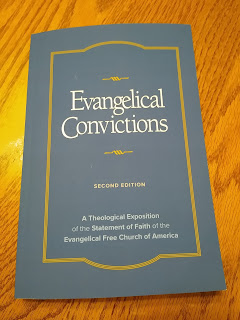
Evangelical Convictions - Second Edition

It's here! After several years and many edits, we now have an updated version of our exposition of the Evangelical Free Church of America Statement of Faith!

I loved reading the first edition when it came out. I thought it was dense...like a pound cake. So it was a great privilege as a member of the Spiritual Heritage Committee to contribute to the process of updating it in light of the change the conference made to our statement on the return of Christ in 2019.

There are are also a number of improvements sprinkled through out and few new additional appendices that I think people will find helpful. 

People have asked if it will be issued in hardback, and I think the answer is maybe down the road. Hardcover books take a long time to produce (the infamous "supply chain issues"), and nobody wanted to wait any longer for this to see the light of day. So it's paperback for now which is nice because it keeps it affordable for the widest distribution.

May the Lord use Evangelical Convictions (Second Edition) for the up-building of the churches of our association to His glory.

Sunday, August 21, 2022

“Let Us...” [Matt's Messages]

“Let Us...”
Lanse Evangelical Free Church
August 21, 2022 :: Hebrews 10:19-25 

Does anybody remember what my key vision word was for this year?

The vision word for 2022 is “good.” I’m simply praying that this year would be marked by God’s goodness and our goodness.


Good News.
Good Deeds.
Good Plans.

And all three of those figure in to this passage in front of us today. I think you’ll quickly hear the strong connection especially between Good Deeds and Good News.


You can really feel the logic in this little paragraph. Can’t you?

There’s clearly some strong logic at work. The author has been building an argument for the last 10 chapters. We don’t have time this morning to review all of that. Someday, I’ll get to teach through the Book of Hebrews to you. It’s a masterpiece of theology, showing how Jesus fulfills and surpasses everything in the Old Testament, including what we’ve been working towards in the Prophecy of Jeremiah.

But, today, we’re parachuting in to the end of the argument, where the author is presenting his (or her) conclusions and pressing home the implications of that argument. This is the “so what” section where we get to the bottom line of what we are supposed to do because of the truth of the gospel that he (or she, we don’t know exactly know who the author was, I’ll be using “he” from here on) has been presenting. And you can just feel the logic. 

It’s got words like “therefore,” and “since.” (There’s two “since’s” in there.)

If this is true...because this is true...since this is true...

Then therefore this is how we should live as followers of Jesus Christ today.

You can just feel the logic.

And, as part of that, he keeps saying, “Let us...” In the NIV there are 5 of them. I hope you heard them as I read it to you. “Let us do this.” “Let us not do that.”’ “Let us...”  So that’s our title today, and here’s what it means:

It means like what they say in the movies right before the action sequence, right before the big fight, right before the good part, right before the beat drops. 

“Let’s do this.”

Let’s get’s busy. “Let’s gooo.” Let’s crack our knuckles and get started. Let’s get down to it. This is what we are supposed to do.

And, today, I’m going to summarize them in three exhortations.

#1. LET US DRAW NEAR TO OUR GOD.

Let’s dive in to verse 19 and see the logic at work. V.19.

“Therefore, brothers [and sisters! That’s us. The family of God, Therefore brothers], since we have confidence to enter the Most Holy Place by the blood of Jesus, by a new and living way opened for us through the curtain, that is, his body, and since we have a great priest over the house of God...” Just stop there for a second.

You feel the logic? You see how it’s building towards a conclusion? 

He’s talking here about the Good News. What we were trying to share yesterday with our guests. He’s talking about the Gospel of Jesus Christ. He’s talking about what Jesus did on the Cross.

Jesus’ blood (v.19) is the reason why we have “confidence to enter the Most Holy Place.” The holy presence of God! For us, that’s in Heaven! 

Before, in the Old Testament, only the High Priest, only once a year, could enter into the Most Holy Place in the temple, symbolizing entrance into the very holy presence of God. And there was this thick curtain that kept everybody out or they would be destroyed by the holiness of God because of the sinfulness of Man. 

But remember what happened on the day Jesus died? The curtain was torn in two! And that symbolized the access that believers now have to the very holy presence of God. Jesus’ death opened up the way, a new and living way. A new and greater covenant! Just like Jeremiah 31 predicted. And Jesus is a new and greater high priest.

Just like we’ve been singing this morning. There is power in the blood of Jesus. “There’s power in the blood of the Lamb.”

“Before the throne of God above
I have a strong and perfect plea;
a great High Priest whose name is Love,
who ever lives and pleads for me.
My name is graven on his hands,
my name is written on his heart.
I know that while in heav'n he stands
no tongue can bid me thence depart,
no tongue can bid me thence depart.”
(Before the Throne of God Above, by Charitie Lees Bancroft)

That’s what the author is talking about here in verses 19 through 21.

And he’s saying that SINCE this is true, THEN “let’s do this.” Let us draw near to our God. v.22

“...let us draw near to God with a sincere heart in full assurance of faith, having our hearts sprinkled to cleanse us from a guilty conscience and having our bodies washed with pure water.”

Doesn’t that just make sense? You feel logic here? Since Jesus died for us, giving us access to God, let’s get close to God!

Draw near.
Don’t stand far off.
Don’t hang back. Draw close to God.

You have nothing to fear!

If you are outside of Jesus Christ, if you are not trusting in what Jesus did for you on the Cross, then you do have something to fear. You have to fear the holiness of God. But if you have put your faith in Jesus Christ, then your heart is sprinkled to cleanse you from a guilty conscience. You are forgiven!

If you have put your faith in Jesus Christ, then your heart is sprinkled to cleanse you from a guilty conscience and you can have  You are forgiven!

You are forgiven!

So live like a forgiven person.

Get up close to the One Who forgave you!

This means prayer.
This means worship.
This means daily time alone with God.
And it means gathering with the people of God like we are doing today.

He says, “having our bodies washed with pure water.” Scholars are divided on this, but that might be a reference to water baptism like Jonathan did just a few weeks ago. And some more of you are getting ready to do, too. Or it could be what baptism points to–the spiritual cleansing that comes from the Holy Spirit. Either way, we are pure because of what Jesus has done. 

So, let’s do this. Put your faith in Jesus, and draw to near to our God. Are you doing that? 

“Oh, the pure delight of a single hour
That before Thy throne I spend,
When I kneel in prayer, and with Thee, my God,
I commune as friend with friend!

Draw me nearer, nearer, nearer, blessed Lord,
To the cross where Thou hast died;
Draw me nearer, nearer, nearer, blessed Lord,
To Thy precious, bleeding side.”
(“I Am Thine, O Lord” by Fanny Crosby)

#2. LET US HOLD ONTO OUR HOPE.

The logic continues. Verse 23. Since all of this is true... (v.23) “Let us hold unswervingly to the hope we profess, for he who promised is faithful.”  

Let’s do this. Let’s hold on. 

Some of you need to hear that this morning. Life is tough, and it seems to be getting tougher. And you need a reminder of the good news of the gospel, and you need to be reminded about our hope.

Our hope here is not our wishes, what we wish will come true. Our hope is what God has promised to us because of what Jesus has done for us. And it makes all of the difference.

That was our message yesterday at the Good News Cruise. We were telling people what Jesus has done for us on the Cross and because of that, what God has promised for us in the future. That’s our hope.

How strong is our hope? Well, a promise is only as good as the promise-maker is good.

If someone tells you that if you meet them tomorrow at such and such a place at such and such a time, they will give you $5,000. How likely is that to happen?

Well, it all depends on the person, right?

And it all depends on how trustworthy they are. Should you arrange your day so as to be at the location at that time? It all depends on who dealing with. That’s why the author says in verse 23, “he who promised is faithful.”

If Jesus gave His blood...
If Jesus opened up the new and living way...
If Jesus because our great high priest over the house of God...

Do you think you and I should hold on to all of His promises for our future?  "He who promised is faithful.”

“The Lord has promised good to me,
His Word my hope secures;
He will my Shield and Portion be,
As long as life endures.”
(“Amazing Grace” by John Newton)

He has GOOD PLANS for us!  Hold onto that! Verse 23 says, “unswervingly.” Don’t swerve from this hope. Verse 23 also says that we “profess” this hope. We say this with our lips. But do we live it out? We talk the talk, but do we walk the walk? Do we say that we believe all of this about God, but then act like we don’t have any hope in our day to day lives?

Let’s do this, Lanse Free Church! Let’s hold on to our hope.

In few minutes we’re going to talk about some of our plans for the Fall. We don’t have a lot to tell you yet. You’ve heard some of them from Keith this morning. We have a few more ideas to share with you. Mostly foundational ones that lay the groundwork for the future. These are moving forward but slowly. And we need to hold onto our hope while we wait.

And one more. Here’s the logic. Here’s where the good news about the good plans leads to the good deeds.

#3. LET US ENCOURAGE OUR FAMILY.

Let us draw near to our God.
Let us hold onto our our hope.
And let us encourage our brothers and sisters in Christ. V.24

“And let us consider how we may spur one another on toward love and good deeds.”

Here’s the logic. The author says that because the gospel is true, let’s do this:

Let’s look for opportunities to spur one another on toward love and good deeds. Let’s watch out for each other and watch for chances to provoke each other towards love.

Isn’t that interesting? The author of this letter knows that we all need poking and prodding to do the right thing. We all need little nudges and little shoves. The Greek word here for “spur” is “paroxusmon,” and it means to “encourage, provoke, stir up, incite.” Poke. It means to lovingly get into each others faces and call each other to do what we know we need to do.

All of a sudden, it’s football season, right?

Did you ever watch the coaches on the sidelines get the players ready to go into the game? I like watch to Todd do this. He pulls on the player’s jersey and gets them to look in his eye, and he says something to them. I don’t know what he says. I’m not down there. But then they nod and they go out and try to do it in the game. That’s “paroxusmon.” That’s stirring them up.

And that’s what the church family is supposed to be for each other. That’s one of the big reasons why we gather. That’s one of the reasons why we are here today. It’s not to watch some religious show. You are not an audience and we up here are performers. We are all here for each other. We are here to get into each other’s lives and spur one another one to love and good deeds. To say to each other once a week, “Okay. Let’s do this.” 

“Jesus is real. Let’s do this.” The week is going to be full of hard things. Draw near to God. Hold onto your hope. And then, get out there and love people in Jesus’ name.

By the way, the Greek words for “good deeds” in verse 24 are the exact same words that Pastor Kerry told us about last week in 1 Peter 2:12. “kalown ergown.” “Live such good lives among the pagans that, though they accuse you of doing wrong, they may see your [kalown ergown] good deeds and glorify God on the day he visits us” (1 Pet. 2:12 NIV).


And, folks, you have done good deeds this last week. Yesterday was good deed after good deed after good deed. Registration, photography, set-up, take-down, prizes, food, parking, food, music, food, greeting people, food. Did I mention, food? You did the good deeds yesterday. And not just here but out the world all the last week. At your job. In your neighborhood. At the family gathering.

Doing good deeds in love for Jesus and in His name.

Good job! Keep it up! Don’t give up. Keep on loving each other and loving even your enemies because the gospel is true. Because of the good news we do the good deeds. That’s the logic.

Some people think that we are trying to do good deeds to earn God’s favor and get into heaven. It doesn’t work that way. The logic goes the other way. Because of what Jesus has done for us by shedding His wonder-working blood, we are free to now love other people and do good deeds in His name.

You see what I’m trying to do here? I’m trying to stir you up. In fact, that’s what I’m trying to do each and every week when we open God’s Word together. That’s a big part of why we gather.

So need to gather! That’s the next thing he says. Verse 25.

“Let us not give up meeting together, as some are in the habit of doing, but let us encourage one another–and all the more as you see the Day approaching.”

Apparently, some people who claimed to be Christians had stopped coming to church gatherings.

The word for “gave up” is the same word as “forsake” like what Jesus felt on the Cross, forsaken, the turned back. Some people had turned their back on the church family and gotten into the habit of non-participation.

And that hurt them! It hurt the people who left, and it hurt the people who stayed. Because we all need each other.

I’m so glad you came to church today because we need you. Notice that the point of gathering is to encourage each other. When you show up for church, you are encouraging the people around you.

When you come to church, you come for yourself because you need it, but you also come for each other, because we all need each other.

You know, covid has been really hard because it has made gathering together more difficult and less comfortable. In fact, at times, it has been more loving to not gather because we have been watching out for each other. Thank you for not coming to church when you are sick with covid. I stayed away when I had it.

But it’s become easier in some ways to not obey verse 25. You get out of the habit of gathering because it’s harder. Because it’s different. Because it’s not like it used to be. Because it’s not familiar or normal. Or comfortable. 

But verse 25 is still in our Bibles even in a time of plague.

We need to encourage each other. We need to poke and prod and provoke and spur one another on to love and good deeds. We need to tell each other, “Let’s do this.”

There’s a new book out the foyer. We got a box of them free from the publisher called, “Rediscover Church: Why the Body of Christ Is Essential,” and there’s a bunch of them out there. They are free for anybody who wants to read it. Or maybe you might want to give it to somebody who is wondering if church is all that important after all.

It is.

Not coming to some building and listening to a concert and an inspirational TED talk. That’s not what church is. Church is the gathering of the family of God to draw near to our God and worship Him and to spur one another on to love and good deeds and encourage each other to hold onto our hope.

To get close to each other and say, “We can do this.”

Let’s do this.

I’m so proud of how this church family continued to meet all the way through the restrictions phase of covid. Sometimes in really different ways like Zoom or in spread-out seating or under a tent or in the parking lot.

But, by and large, you have done a great job of staying committed to each other.

And encouraging each other.

I hope that everyone who comes on Sundays is both encouraged and an encourager.

Let me tell you this: Come to church bent on encouraging someone each week, and you will go home encouraged yourself.

Come to church bent on encouraging someone each week, and you will go home encouraged yourself.

Let’s do this!
Let’s do this!

Let’s really do this.

You see how the author intensifies it at the end of verse 25?

“...let us encourage one another–and all the more as you see the Day approaching.”

What Day is that? It’s the day of Christ’s return. Jesus didn’t just die and rise again and ascend to heaven like Abe told us about two weeks ago. But Jesus is going to come back soon, like Abe also told us about two weeks ago.

And we need to remind ourselves of that again and again and again. We need to tell each other that again and again and again. One of the reasons why we gather as a church every Sunday is to remind each other that there is a Day coming when all will be made right.

When everything that is bad will come untrue.
When all of those promises that God has made will be fulfilled.
When the kingdom of Christ will come in all of its fullness.
The Day is approaching! We can see it approaching.

It’s sooner now than it has ever been.

Joel was just talking about that at Prayer Meeting this Wednesday in Mark 13.

“Let us encourage one another–and all the more as you see the Day approaching.”

Do you see the logic? Do you feel it?

Let’s do this.

Lanse Free Church:

Let us draw near to our God. We have confidence in the blood of Jesus. Good News.
Let us hold onto our hope. He who promised is faithful. Good Plans.
And let us encourage our family towards love and Good Deeds because the Day is approaching.

And what a Day of rejoicing that will be!