Showing posts with label Recommended Resources. Show all posts

Tuesday, August 12, 2025

Great Commentaries on the Book of Daniel

Preaching the prophetic book of the wiseman Daniel was an incredibly daunting task. Daniel is a nexus in the Bible where so many incredible elements come together–two ancient languages, multiple apocalyptic visions, beloved stories, counter-cultural and counter-intuitive applications, and so much more! 

I put off preaching Daniel for many years, but believed it was time to climb the summit in the first part of 2025. Our series was called “The King of Kingdoms” highlighting the central message and central character of the book.

To prepare, I spent a lot of time reading some wonderful commentaries by leading scholars. These were my favorites:


Tanner’s commentary is “the total package.” This is the height of evangelical scholarship on Daniel at this moment. Tanner has clearly read everything, and I mean everything. No stone is unturned. He provides an extensive bibliography and painstaking text critical notes, translation notes, and footnotes.
At the very same time, Tanner’s book is incredibly readable. He writes straightforward, accessible sentences in clearly marked sections so you always know where you are in the flow of the argument. There are helpful charts. Tanner is judicious and fair with all of his scholarship. He points out the strongest arguments of his opponents and the weakest of his own. He comes to dispensational conclusions but does not presuppose them. And it’s is warm-hearted, as well! Every unit includes commentary that ties that section of scripture to the rest of biblical theology and offers personal application, too. This is the very best kind of evangelical scholarship!

Tanner’s big books is probably too much for most ordinary readers, but most pastors should have this one if they’re going to tackle preaching Daniel.


David Helm’s little commentary is the overall best for most other readers. It has bite-sized chapters and reads like a great sermon full of relevant application. Helm’s scholarship is evident, but the book is light on footnotes. He does a great job of focusing on the main thing and not getting sucked into various secondary debates. I would recommend this to book to just about any reader who wants to understand Daniel.

By the way, if you want an excellent audio orientation to Daniel, make sure to listen to Nancy Guthrie’s interview with David Helm on the “Help Me Teach the Bible” podcast. I listened 3 times before tackling Daniel on Sundays!


I cut my teeth on Whitcomb’s little commentary back in my Bible School days in my “Dan/Rev” class. Revisiting it 30 years later, I was surprised at how readable and good it was. Concise, precise, helpful. Whitcomb is dispensational, but this book is not a defense of a system or a diatribe. It is a short commentary worth having and using.


Schwab’s book was fascinating reading, full of so many insights. I didn’t always follow him (either in understanding him or in his decisions), but I was always was happy I’d read or re-read the chapter. My copy has sticky-notes plastered all over it at the most insightful (or entertaining) points, like when it says, “Perhaps it is a sign of the end times when scholars disagree on whether it is the Christ or the Antichrist spoken about in a text!” (pg. 144). I’m glad I read it.


Davis is one of my all time favorite Old Testament commentators. He’s always insightful and delightful, and this was no exception. Davis is not afraid to be controversial. I didn’t always jive with his more daring suggestions, but he’s always worth reading. 

Tremper Longman III, How to Read Daniel.

This book is just what the title page says. It’s not a commentary (though it has commentary in it), nor a compilation of sermons (though there are two long chapters of application and implications at the end) but an orientation to the book and an explanation of the appropriate hermeneutics for this unique genre. This kind of approach is especially important for Daniel as it is so wild and different from just about any other book. I re-read every chapter multiple times. 


Wright is one of my favorite authors, especially when he’s teaching through an Old Testament book (his commentary on Jeremiah was simply superb). He’s great at capturing the essence of a section of scripture and presenting it in a compelling way. Recommended.


Duguid’s commentary is a collection of sermons so it’s very readable and focused on devotion and pastoral application. At the same time, he’s clearly done his scholarly work to reach his conclusions so it’s valuable as a resource for interpretation, as well.

Probably the most helpful thing for me was to read how a non-dispensational amillennialist understands the book of Daniel. I was given my framework for reading Daniel at Moody Bible Institute and wasn’t exposed to other faithful positions from others who believed in inerrancy and had healthy hermeneutics. It was great to be given a different set of lenses–and also see how the applications ended up largely the same.


Osborne’s book is not a commentary on Daniel, per se. He doesn’t walk through the book of Daniel showing you what’s in each chapter. But he does provide trenchant thoughts on application of teaching in Daniel for daily living in a hostile environment.

I read Thriving in Babylon several years ago with our small group, and we had great conversations about it. A wrote a discussion guide for groups that continues to be one of the most-used items on my blog. 


Chase gets to the chase! In a similar fashion to a Derek Kidner, this free online commentary is chock full of blessed incisive concision.

I also profited greatly from the study notes in the CSB Study Bible (Michael Rydelnik), NIV Zondervan Study Bible (Tremper Longman), ESV Study Bible (Iain Duguid), and NIV Study Bible (Gleason Archer and Ronald Youngblood), Knowing the Bible: Daniel (Todd A. Wilson), and the NET Bible online.

I wouldn’t have wanted to preach Daniel without any of these books, but I probably could have gotten away with just Tanner, Helm, and Longman (and maybe Duguid) this time around. If your budget is tight and you have to pick 3, those would be my suggestions.


I am grateful to the Lord for providing these rich resources to understand His Word and grow in my faith and love and obedience to The King of Kingdoms!
Saturday, August 02, 2025

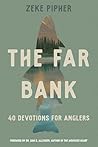
"The Far Bank" by Zeke Pipher

The Far Bank: 40 Devotions for AnglersThe Far Bank: 40 Devotions for Anglers by Zeke Pipher
My rating: 5 of 5 stars

Zeke Pipher knows about deep waters. In The Far Bank, Zeke has penned forty searching meditations on holy Scripture through the eyes and heart of a true fisherman. I’ve never been an angler myself (fishing always sounded more like work than rest), but my friend Zeke almost makes me want to tie a fly and wade into a river with his mesmerizing descriptions and meaningful tales.

The Far Bank is far from shallow. Zeke draws from some of the richest sources in Christian theology and plumbs some spiritual depths. I was personally encouraged by every insightful essay. I received a free copy in exchange for an honest review, and my honest opinion is that Zeke is a man of understanding who is always worth reading (see Proverbs 20:5).

View all my reviews

Tuesday, December 31, 2024

My Top Books of 2024

In the realm of reading, this last year was very much like previous years* for me.

It turns out that I even completed the exact same number of books (64) as I had in 2023. I continued to mine similar quarries and read in the same veins–authors, genres, subjects. I actually re-read about a dozen books from previous years, some for the fifth time!

All the same, I never felt like I was spinning my wheels in a rut. The “more of the same” is simply just more of the same blessing. It felt like forward progress. I’m still regaining some of the ground I had lost from more productive pre-pandemic years gone by and maintaining what I had attained through my restorative sabbatical. My reading goals have been more modest and right-sized so I feel good about what I’ve accomplished.

In 2024, I was exposed to some pretty terrific books!


This book was the happiest surprise of 2024. As I said in my incandescent review, “I have been searching for a book like More to the Story for a very long time. As a Christian pastor, I want the young people I care for to have really good answers to the difficult questions they are all asking about sexuality these days. And to be really good answers for today’s teens, they have to be realistic, biblical, confident, joyful, hopeful, comprehensive, concise, and readable. That’s a tall order!

How pleasant it was for me to discover that one of my EFCA friends had written such a book.”

Jennifer’s book is well-deserving of the various accolades it has received, including the award of merit from Christianity Today. It is simply excellent and just what the church needs in our day.


Fred Sanders’ latest book is the one I most needed in 2024. He introduced me to Someone I already know intimately but often don’t understand. It is chock-ful of “aha” paragraphs. As you might expect from his previous work, Fred hasn’t just written a book about One Person of the Trinity but the entire Trinity in relation to the Third Person of the Trinity. The appendix with “27 Rules for Thinking Well About the Holy Spirit” distills the whole book and is worth the proverbial price of it. 

Sanders’ writing is robust, rich, deep, and erudite and yet, at the same time, concise, clear, and even playful. It’s the not most hardest theological book I read in 2024, but the best. I will be re-reading The Holy Spirit: An Introduction again very soon.


Most people (not just Christians) have heard of C.S. Lewis and J.R.R. Tolkien because of the tremendous reach of The Chronicles of Narnia and The Lord of the Rings. But many people do not know that these two Oxford-scholars-turned-popular-authors were close friends or how their fellowship spurred on the creation and publication of their fantastical stories.

In The Mythmakers, New York Times bestselling, award-winning creator John Hendrix has beautifully crafted a unique way of spreading the story of their collaborative friendship. I knew the outline of the story and had even gotten to visit some of the key locations where it all happened during our sabbatical in 2023 (The Kilns, Addison’s Walk, The Eagle and Child), but I still learned a lot, especially how all of the different parts were connected, and I thoroughly enjoyed how Hendrix wove his tale with both words and images. There is nothing quite like it.

I really enjoyed listening to Hendrix talk about the book at The Habit Podcast and The Wade Center Podcast.


Ed Welch has the gift of saying just the thing (and everything!) you need to hear in just a few well-chosen words. 

Ed’s book speaks light in a way that someone experiencing the stubborn darkness can actually hear. Depressed people often can’t read more than a few words at a time. These thirty-one short readings are apples of gold in settings of silver for those who are under the heavy weight of depression (Proverbs 25:11).

Depression: Finding Christ in the Darkness is a good book to read if you love people who live with depression, even if you don’t experience it yourself. Ed knows how to talk about it without mixing in shame while at the same time illuminating a new path that sinner/sufferer/saints are called to walk.


Here is another extremely timely book. When I recommended it in The Family Table, our weekly newsletter for parents at Lanse Free Church, I said, “Every Christian parent with young children should read this book right away. Parenting Without Panic in an LGBT-Affirming World should be required reading for raising a little kid in today’s culture. Given her own story, Rachel Gilson is a perfect person to write it. Her earlier memoir Born Again This Way was one of my top books of 2020, and I’m very glad that she’s now giving out this practical, well-written, insightful, realistic, and biblically balanced advice. I wish it was written earlier! I especially appreciate how Gilson counters all the big fears we all feel. These fears are not baseless, but they should not define or drive us. Read this, soak in the principles, prepare your kids, and fear not!”

It turns out that I read several books on this and related subjects this year in addition to Kvamme and Gilson which were really good. Purposeful Sexuality by Ed Shaw explains what sex is actually for in a few concise and pages. In the same series, Andrew Bunt’s Finding Your Best Identity, helpfully explores the question of who or what gets to define who you are. In Does the Bible Affirm Same-Sex Relationships?, Rebecca McLaughlin responds to the ten strongest arguments from those who claim the Bible affirms (or doesn't teach about) same-sex romantic/sexual relationships. Written by a woman herself who experiences persistent same-sex attraction. McLaughlin is a treasure, well-read, and an excellent communicator. In 2024, I also read her No Greater Love which covers the concept of biblical friendship.

I am very grateful for the blessing of having so many great books in my life. 


***

* This is my eleventh time sharing a list like this! (I didn't get one out in 2019.)

As I’ve said for over a decade [2013, 2014, 2015, 2016, 2017, 2018, 2020, 2021, 2022, 2023], this list is not necessarily the best books that were published that particular year or the most enjoyable either. I intend it to be a list of the fairly new Christian nonfiction books I read:

- that had the most personal impact on me, my thinking, my heart.
- that I was the most consistently enthusiastic about.
- that I kept coming back to again and again.
- that I couldn't help recommending to others (and recommend without reservations and significant caveats).

Friday, May 03, 2024

“More to the Story” by Jennifer Kvamme

I have been searching for a book like this for a very long time.

As a Christian pastor, I want the young people I care for to have really good answers to the difficult questions they are all asking about sexuality these days. And to be really good answers for today’s teens, they have to be realistic, biblical, confident, joyful, hopeful, comprehensive, concise, and readable. That’s a tall order!

How pleasant it was for me to discover that one of my EFCA friends had written such a book.

Jennifer Kvamme is Student Ministries Catalyst at Centennial Church in Forest Lake, Minnesota. She and I have collaborated on EFCA publications in the past, and when I heard about More to the Story: Deep Answers to Real Questions on Attraction, Identity, and Relationships, I was eager to hear what she had to say.

Jennifer writes as a true friend and wise mentor. She is sensitive to her young readers’ feelings and gentle with past hurts and poor decisions. Life is gritty, confusing, and painful. At the same time, Jennifer is joyful, confident, and unwavering in holding out God’s good design for sexuality. In three opening chapters and then at every turning point across the rest of the book, Jennifer embeds all the biblical teaching on sexuality in the grand storyline of the Scriptures. Sexuality is a grand glimpse of something deeper. There is more to the story. And the ultimate hero of the story gets the credit He deserves for His compassion and redemption. Jesus is fixing what has been broken so that following Him will be worth it all.

More to the Story does it all. I no longer have to point teens to a little library of resources I have assembled to address the long list of questions they have. Jennifer covers the waterfront in concise chapters that each end with meaningful questions for personal reflection. Students that need or want to go deeper can follow the endnotes or read her annotated recommendations for further reading. Youth groups can utilize the well-written discussion guide to jumpstart great conversations. The folks at The Good Book Company have done a beautiful job of laying out the book’s design to undergird its message.

While I’m sure it’s not perfect, I don’t have any real critique to offer. Unlike most books on this topic, I never had to wince as I read it. I never wished that Jennifer had said something differently or “not gone there.” Her counsel is sound, balanced, robust, and hope-giving. It’s even humorous at appropriate times! As all other books on this topic, More to the Story will feel dated at some point, probably frustratingly soon. Life is just getting more complicated. But this book is simply excellent and just what the church needs in our day.

I wish we had this book when our own kids were teens, but I’m glad we have it now. Highly recommended.

Give a copy of More to the Story to every sixteen-year-old you know.

Saturday, December 30, 2023

My Top Books of 2023

For me, 2023 was a strange year for reading books.

I did read more books than I did last year (nearly back to the level of 2021 but nothing like what I used to accomplish in years gone by) but mostly lighter stuff for relaxation and entertainment, especially classic detective fiction. I obviously needed the mental break of my sabbatical, and, thankfully, I got the rest I desperately needed! I continued to start books and read at books and buy books and listen to podcast interviews about books, but I didn't finish reading very many non-fiction books as I used to. I didn't write any full length books reviews, though I did get to coordinate a few reviews for the EFCA Blog.

The literary highlight for me in 2023 was motoring up and down the United Kingdom following in the footsteps of some of Heather and my favourite authors: C.S. Lewis (The Kilns!), J.R.R. Tolkien (Addison's Walk, The Eagle and Child!), Beatrix Potter (Hilltop!), Agatha Christie (Greenway!), Ellis Peters (Shrewsbury!), and especially Dorothy L. Sayers. 

The Ship Inn, Formerly "The Anwoth Hotel" of DLS Fame
Sayers' famous fictional sleuth, Lord Peter Wimsey, turned 100 this year, as he first appeared in her novel Whose Body in 1923. Heather and I first discovered her and him in 2000 and have read through the entire Wimsey canon numerous times. This summer we not only visited DLS-connected locales in Oxford and London but traveled out to Gatehouse of Fleet and Kircudbright to stay in the very same hotel Sayers actually wrote The Five Red Herrings and to explore the artists' community featured in the story. At the very same time, I started reading my way through Barbara Reynolds' collections of Dorothy L. Sayers' letters (two down now, three to go). What a delightful privilege to have those experiences!

We also stopped at nearly every bookshop we encountered and brought home some beautiful editions. We even visited Hay-on-Wye, a town in Wales that is the world's largest secondhand and antiquarian book center, with more bookshops per person than anywhere else. It was hard to pull ourselves away!

And for the first quarter of the year, my reading was focused on finishing the reading of several excellent commentaries to be able complete a yearlong study of the Prophecy of Jeremiah for Lanse Free Church.

All that to say, for a good part of the year, I wasn't accomplishing that much discretionary reading of Christian non-fiction that developed my mind and soul.

And yet, I did actually read some really good books in that vein* in 2023, and these are the ones that rose to the top of the pile:


This short book is hard to describe, which is one of the things I love about it. It's basically an extended elegiac essay on how hard just living life can be and how it's still worth doing (and how that helps to do it). Noble is clearly working out his own mental health issues within a Christian framework and sharing his work with others who might benefit from it.

The review we published by Kate Loomis at EFCA Blog captures well my experience of reading On Getting Out of Bed:
"I love On Getting Out of Bed because it reads like a letter of encouragement to the church. He talks about the importance of our witness, our modeling to others that life is good. The way he thinks and talks about this difficult topic is a picture of the modeling that he describes. His writing, simultaneously complex and simple, wraps around itself, weaving the experience of mental suffering through the simplicity of the gospel and returning always to the question at hand, “Why live?”

He is not having the last word, but rather inviting us to participate in the conversation and to draw on authors and artists who speak to us, just as he cites T.S. Eliot and others. He describes the narrow way that all Christians are trying to walk, and he includes those who might have seen themselves as disqualified because of their mental suffering. His message is a reminder that mental suffering is common to everyone, that getting out of bed in the morning is a way of praising God for the goodness of His creation.  He urges us to keep on doing it. Through the pages of this book shines a brother who cares about our souls, an encourager of the brethren, a fellow traveler on our way home."
It's not for everyone (Noble's style will put some off just as it pulls others in), but for those it's for, it will really help them.

My quest to grasp and enjoy the Christian doctrine of the Trinity continues. A book about the Trinity has made the last seven of these top book lists.

This year, the best book I read on the Trinity is by Glenn Butner which won the Christianity Today 2023 Award of Merit for Academic Theology. Trinitarian Dogmatics is different from other books because it explores the "grammar" of the constituent sub-doctrines that add up to a fully-orbed teaching on the Trinity, and it does it thematically/conceptually instead of historically/chronologically. So it's more of an "introduction" but on a high level. At times it soared above my level of comprehension, but even then I could tell that the author was being judicious and even-handed with his scholarship. I will be grabbing it off of my shelf to review as I need a deep refresher on what various terms mean. 

Another thing I enjoyed about this book was how Butner wove in theological contributions from different world cultures than our white Western ones. We need more of that kind of cross-cultural  conversation in our systematic theology, and I appreciated Butner's approach to it as a model.

I hadn't set out to read this book. It had been recommended to me by a trusted friend, but I hadn't ordered a copy. But then it was just sitting there on a bookshelf at this sweet little Christian bookshop in Edinburgh, and I took it as a sign. I'm glad I did, and I'm looking forward to Butner's next book which promises to do the same thing with Christology.


Evangelicalism as a theological and social movement is on bumpy ride in America. As a prominent and sometimes prophetic voice Russell Moore, the editor-in-chief of Christianity, has taken quite a few of the bumps and lumps himself. I read everything he writes, including his weekly newsletter, "Moore to the Point." 

I find most of Moore's writing to be beautiful and life-giving, often giving words to what I inarticulately feel. It's also surprisingly playful and replete with seemingly paradoxical language. I love how Moore juxtaposes.

Losing Our Religion is sober and somber yet still hopeful. Moore laments where American evangelicalism has been and maps a way forward, mainly by returning to our roots and truly living out our stated values. It's far from the last word on the subject, but Moore always has an important word to offer.


I wasn't sure what to expect from this book. It was written on a subject dear to my heart by one of my friends with one of his friends. Pastoring in a small town is my life's work. I've been serving in Lanse (population ~400) for over a quarter of a century. What might these guys say that would be helpful to me?

My friend Ronnie Martin is a transplant to small town living. Until about ten years ago he had spent most of his life in urban southern California and touring the America with his electropop band. His friend Donnie is more of a small town native. 

I really appreciated what both of them had to say about pastoral ministry in a small context (dovetailing with the insights from my all time favourite book on small-place ministry, A Big Gospel for Small Places).

Ronnie brought a "outsider-moving-inside" perspective. As a newcomer, he didn't pretend to have all of the answers which was refreshing. He also captured a lot of "what it's like" in ways I couldn't have because I've been embedded in it so long. Both authors brought a lot of Scripture into application for small-town ministry context in ways I appreciated. A group of pastors met on online all Fall to talk through what we got out of it. It wasn't dynamic or dramatic, but neither is this kind of ministry most of the time. As a review from a UK reader, "Pastoring Small Towns does what it says on the tin."

["Honorable mentions" for books I read in 2023 in the category of pastoral ministry include The Flourishing Pastor by Tom Nelson and Bully Pulpit by Michael Kruger. Both are highly recommended.]


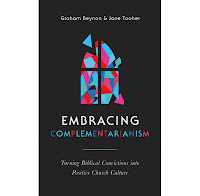
Complementarianism is the Christian teaching that men and women are significantly the same (in essence, worth, and salvation) and significantly different (in specific responsibilities and roles) and significantly need each other to become what God intended us to be. Women and men complement each other. This is true in both marriage and in ministry. This book focuses on the ministry of the church. 

Most books on complementarianism spend a good bit of time arguing for the position and exploring the biblical basis for it (a good and much needed thing). Graham Beynon and Jane Tooher lay those things out briefly in a couple of the chapters but mostly assume that they are talking to those already-convinced who are looking for help in turning the concepts into reality. So it's not an argument but a guide. At the same time, they also don't turn it into a nuts-and-bolts manual. The authors don't tell you exactly what to do and what not to do. They help church leaders think through their approach and put their convictions into practice. Tooher and Beynon are from the UK and Australia and from different denominational structures. They recognize that complementarianism is going to look different in different contexts.

I really appreciated how the authors modeled a healthy complementarianism as they wrote together. The book is generous, careful, and thoughtful. There are no caricatures nor pretending or assuming that embracing complementarianism will be simple or easy to do in our current cultural context. But it's positive, as well. This work is worth doing and worth doing well. I can see Bible-believing churches using this book to good effect, maybe as a game-changer for some. It's also very well written and easy to read. 

Extra: This morning right before finishing this post, I listened to an excellent podcast on the topic of complementarianism from the FIEC leaders conference in the UK: Different, Yet the Same: Is Complementarianism Unjust? by Linda Allcock. She also highly recommended Embracing Complementarianism as a key resource.


***

* As I’ve said before [2013, 2014, 2015, 2016, 2017 2018, 2020, 2021, 2022], this list is not necessarily the best books that were published that particular year or the most enjoyable either. I intend it to be a list of the fairly new Christian nonfiction books I read:

- that had the most personal impact on me, my thinking, my heart.
- that I was the most consistently enthusiastic about.
- that I kept coming back to again and again.
- that I couldn't help recommending to others (and recommend without reservations and significant caveats).

Thursday, April 27, 2023

Great Commentaries on the Book of Jeremiah


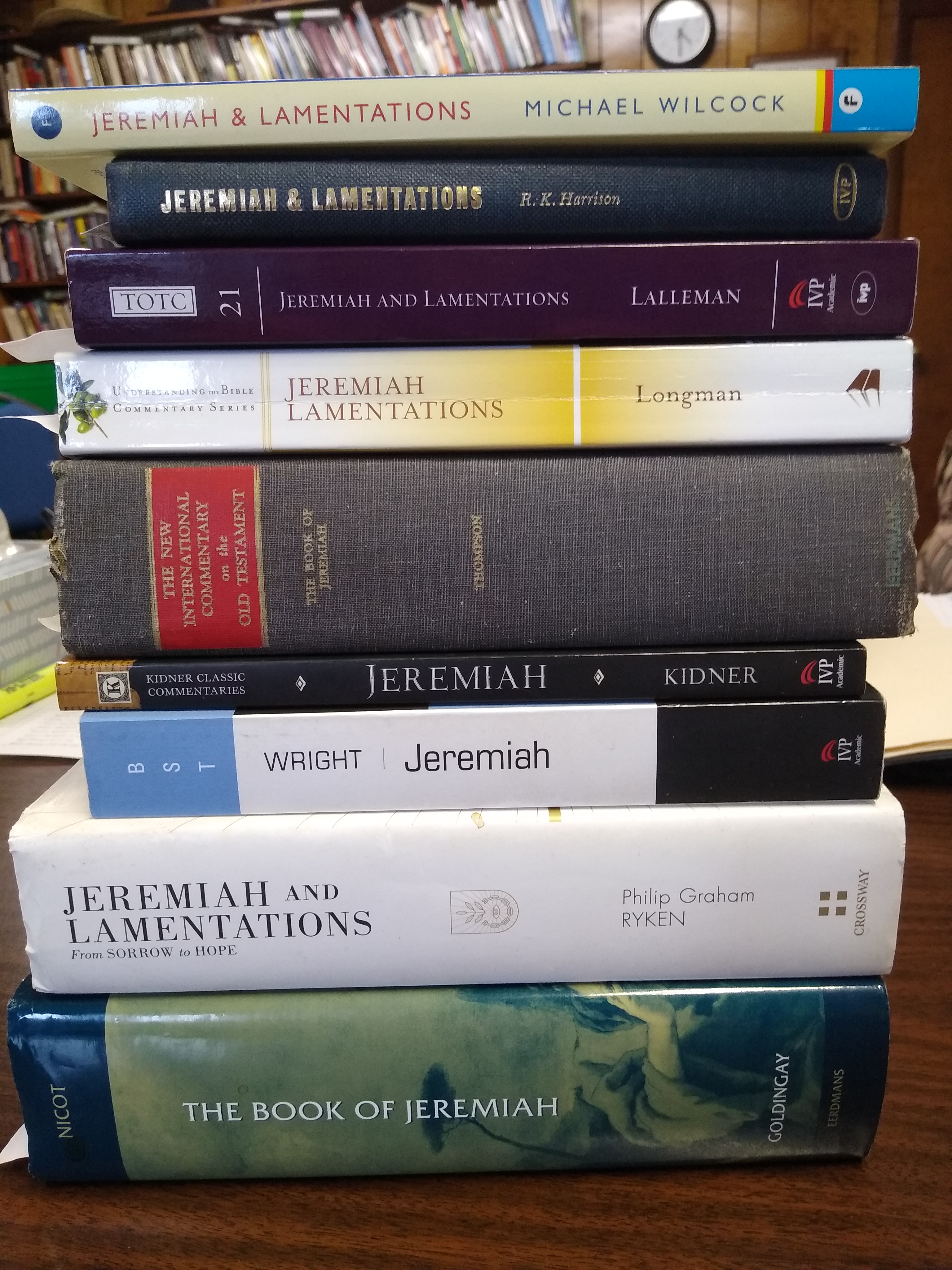
Over the last year, I had the great privilege and joy of preaching all the way through the Prophecy of Jeremiah for Lanse Free Church. Fifty-two chapters in thirty-six messages! I know that I couldn't have done it without the help of my friends--specifically the friendly scholars who write such helpful commentaries on the Words of Jeremiah. Here is are the best ones I read over the course of our series with a few notes about each one.


If I could only have one commentary on Jeremiah, Wright's is the one I would pick. I can't overestimate how helpful it was for understanding and even applying the sacred text. Even when I reached a conclusion before reading Wright's treatment of a passage, I was relieved to find out that my instincts were "right." It is imminently readable, judicious, insightful, scholarly, and pastoral. Highly highly recommended.


Goldingay has forgotten more than I'll ever know about Jeremiah. I'm glad his commentary came out a few months before I began my series. He proceeds from a few assumptions that I don't necessarily share (which leads at times to conclusions I don't share), but he's incredibly knowledgeable and perceptive. I learned from every page. I knew I needed this tome after I read his summary book The Theology of Jeremiah: The Book the Man, the Message which I also referenced every week using the scripture index to make sure I wasn't missing something important. Read with discernment, these are highly recommended resources.

When I read the introduction to Lalleman's commentary, I understood for the first time the importance of 1:10 and its themes, especially the idea of the coming uprooting that Jeremiah was to predict for Judah. Hence the title of our series: Uprooted - The Words of Jeremiah. Thank you, Hetty Lalleman! I don't know what the series would have been like without your help.


This compilation of Ryken's sermons on Jeremiah's books was invaluable to me, especially as a guide to application and homiletical delivery. I hope I gave Ryken credit for all of the turns-of-phrases I used that captured the thought so well. The original sermons are also available to listen to at The Gospel Coalition website.


Wilcock was great for giving a different perspective on passages (without seeming forced or changing the overarching message) and providing of the overviews of large sections together. I was amazed at how much he could pack into a few pages without seeming to be stuffing anything into anything. He also had interesting ideas about the composition of the text and why parts of Jeremiah are placed where they are--always an interesting question since Jeremiah jumps around so much chronologically!


Deceptively short for all the good stuff it contains.


As always, Kidner is concise, precise, and incisive. While C.J.H.Wright has replaced his commentary in the series (and surpassed it, too), Kidner is always worth reading (that's why Wright quotes him so often!). 


Longman knows his Old Testament, and I'm always glad I read him. This one is more like the commentary notes at the bottom of a study Bible than a full commentary, but I don't know how many times, I found something there tidbit to ton that eventually made it into a message. 


Thompson's commentary was the gold standard before Wright and Goldingay came along (Goldingay replaced Thompson's in  the NICOT series), and it's obvious why. I'm glad I read every word.


I found this Bible study by Matthew S. Harmon at The Gospel Coalition to be really helpful, especially as an overview. I think that small groups would profit from using it over a twelve-week period.

Study Bibles

The best study Bibles out there have really helpful notes. I consulted these every single week: NIV Study Bible, NIV Biblical Theology Study Bible, ESV Study Bible, CSB Study Bible and the incredible translation notes at the NET Bible online. 

One of the things I enjoyed the most about studying Jeremiah was getting to know Jeremiah the man. I have read his book many times but never felt like I knew him. Slowing down to read his words carefully and discuss him (at least in my head) with these amazing scholars gave me a much better sense of who he was as a person and what his painful message was for the people he loved. I hope I'm a better follower of the LORD because of it.

Tolle Lege!

Monday, January 09, 2023

"God Is Still Good" by Katie Faris

Our friend Katie Faris has just published a new book with Crossway--God Is Still Good: Gospel Hope and Comfort for the Unexpected Sorrows of Motherhood. It is characteristically good--full of Scripture, stories, and solid truth. 

I read everything that Katie Faris writes--even though I'm not in her target audience. She has a way of connecting biblical truth to the hard realities of life that brings true comfort (not sentimentality).

Information about how to order a copy and even a playlist to go with God Is Still Good are on Katie's website. Check it out.

Friday, December 30, 2022

My Top Books of 2022

For me, 2022 was not a good year for finishing books. I read at and from books, but I didn’t read through very many of them. I read fewer books to the very end than I can remember in recent decades (18 fewer than the previous year!), and I didn't publish any full book reviews. I’m not completely sure why the paucity. It’s definitely a holdover from the mental pressures of the pandemic and also a simple sign of the particular season of life I’m in–I have listened to many more podcasts as I’ve walked the streets of Lanse than I have sat in my chair and turned pages. A lot of my reading time in 2022 has been focused on studying the Prophesy of Jeremiah–a worthy effort, and those books will be on the 2023 list, Lord-willing!

Of the ones I did finish in 2022, these were books* that impressed and taught me the most:


Count on Ed Welch to cut right through the fog with the gentlest and most succinct choice of words. How do should we think about psychiatric diagnoses like anxiety and panic disorders, trauma, depression, and narcissism? In just 85 compact pages of careful and care-filled wisdom, Ed shows us the way. 

After 25 years of reading his writing, I keep expecting to know what he's going to say, but instead I should be expecting to be surprised and learn something new. Highly recommended.


I read everything I can read (and follow) by Fred Sanders when he's writing on the tri-unity of God. This collection of essays coordinating the doctrines of the Trinity and Soteriology (salvation) were incredibly rich and characteristically delightful to read. At times, I had to read parts of it out loud to Heather just because it was so insightful and well-constructed!

An added bonus was that in the Spring I got to take a class on this book with Fred through the Greystone Theological Institute online and on site--the richest theological learning experience I have had in long time.

Evangelism As Exiles
Life on Mission as Strangers in Our Own Land by Elliot Clark

Last winter I was preaching through 1 Peter, and I kept Evangelism as Exiles at my elbow the whole time. Elliot Clark caught the lightning of Peter's first epistle in a bottle and gives it to you to drink! Even though it was my second time to preach through 1 Peter (even at times the same passage 20 years to the day!), I never have understood what it means or how to apply it to our current situation like I did after digesting Clark's little book.


My pastor, Kerry Doyal, convenes a monthly book-discussion group on Zoom of district pastors, and Paul Tripp's LEAD was our book for half of 2022. At times Tripp made me uncomfortable because he was stepping on my toes!

I recommend LEAD for leadership teams, especially for challenging conversations about how healthy your team is and how truly transparent you are with one another. 

Gender: A Conversation Guide for Parents and Pastors
by Brian Seagraves and Hunter Leavine

I have been doing a lot of reading on gender and identity this year to better understand and respond in our current cultural moment, and I thought this 77 page book was a really helpful starting place

Seagraves and Leavine give parents and church leaders foundational truths and insightful conversation starters appropriate for kids of different ages. This isn't the last word, but it's a good first one.

[Similar (and free!) resources come from Andrew Bunt of LivingOut: Quick Guides on Gender Identity and Trans Identification as well as Josh Glaser and Paul Rhinehart at The Gospel Coalition: How to Talk with Your Kids About Transgender Ideology.]

I'm grateful that my life is full of good books even when I don't get them read to the last page. Our church has granted me a generous three month sabbatical next year, so I hope to read (and finish!) a lot more books in 2023. 


***

* As I’ve said before [2013, 2014, 2015, 2016, 2017 2018, 2020, 2021], this list is not necessarily the best books that were published that particular year or the most enjoyable either. I intend it to be a list of the fairly new Christian nonfiction books I read:

- that had the most personal impact on me, my thinking, my heart.
- that I was the most consistently enthusiastic about.
- that I kept coming back to again and again.
- that I couldn't help recommending to others (and recommend without reservations and significant caveats).

Wednesday, June 01, 2022

"He Will Be Enough" by Katie Faris

Our friend, Katie Faris, has just published a new book with the Good Book Company entitled, He Will Be Enough: How God Takes You By The Hand Through Your Hardest Days.I got to read an advanced copy, and it's really good. Knowing Katie and her writing, I figured it would be, but I was not only un-surprised by its quality but very encouraged by her words. It was a joyful privilege to offer my endorsement:
Our friend Katie has a unique way of writing both from a place of frailty and weakness and also with a clear heart of joyful confidence in the Lord. She calls it ‘write in the middle,’ and her distinctive voice comes through once again in He Will Be Enough as she ministers God’s sufficient grace to her readers. I will be handing out copious copies, especially to those finding themselves caught in the middle of uncertainty and pain.
In the video below, Katie talks about the central idea behind the 20 meditations. I encourage you to watch it, download all of the free resources (Bible worksheets and reflection questions), and definitely read the book. It's compelling and heartening.

Friday, April 15, 2022

"Misquoted" by Russell Muilenburg

My friend Russell Muilenburg has published his first book!

Russell and I have known each other for more than a quarter of a century, having met during summer Greek (also known as "suicide Greek") at Trinity Evangelical Divinity School back in the day. Then in our first semester at TEDS, we had the exact same schedule and got to spend a whole lot of time together. After seminary, we've stayed in touch and have continued to encourage each other as we walk through the ups and downs of ministry in the 21st century. 

Russell is a good thinker and a gifted teacher. I've always profited from reading (and, with permission, copying from) his sermons. I'm glad that he's started to provide resources for a wider audience (check out his website: eatthisword.com).

It was a joy to provide my endorsement for this new release:

"'Everything happens for a reason,' including you picking up this thoughtful little book by my friend Russell Muilenburg. In Misquoted, Russell interrogates several of the hackneyed sayings we Christians have been known to overuse. But Russell doesn't just dunk on and debunk Christian cliches--he also shows how each trite adage can also reveal a kernel of biblical truth and how we can be more discerning in what we say to each other, especially when we are going through hard times. I recommend that you 'just follow your heart' and start reading Misquoted today."

Monday, January 10, 2022

Great Commentaries on the Psalms

The Psalms got me through 2020-2021.

When the pandemic hit, I was finishing up a multi-year study of the Gospel of Matthew and immediately jumped back into the Letter to the Philippians--my go-to book for understanding the essentials of gospel ministry (3rd time through from this pulpit!).

But when we were done with Philippians, I wasn't at all sure where to go next, and a dear saint from our church family suggested we turn to the Psalter, the songbook in the center of our Bibles. After some initial hesitation, it was clear that this was exactly where the Lord wanted me to find Him for the next year.

I ended up preaching 45 messages from the Fortifying Truth of the Psalms, not quite a third of the whole thing, but just about every Sunday for a whole year. I hope it was good for our church. I know it was exactly what I needed--rich songs to express the entire sweep of everything going on my heart--good, bad, ugly, sad, everything.

The soundtrack of my sermon prep nearly every week was the amazing EveryPsalm project from Poor Bishop Hooper. One time, Jesse Roberts even sent me the next song a week early so that I had it in my head and heart for preaching (thanks, Jesse!).

And these guys, through their books, were my constant companions as I studied and wrote each week. Let me say a few words about each of them. I read some others, too, but these were my favorites, and most helpful to me. Though I've only met two of them, they all feel like old friends:

John Stott, Favorite Psalms

I've owned this one the longest. It actually belonged to my Grandma Mitchell, my Dad's mom, and I inherited it when she died in 1999. It has short but substantive exposition of Stott's most favourite (I'm sure the Anglican pastor would have included the British "u" in his original manuscripts) psalms with full color pictures that match each of the inclusions.

I got to meet Dr. Stott at a conference at Elmbrook church in the late 1990's. A wonderful experience. It may be because of how many times I've referenced this book over my pastoral ministry, but I've found that most of his favourite psalms have become my favorite psalms.

Derek Kidner, Psalms 1-72, Tyndale OTC (vol.14a) & Psalms 73-150, Tyndale OTC (vol.14b)

Of course, Stott's book doesn't cover all of the Psalms. To do that you need bigger longer books. Strangely enough, Derek Kidner covers all of the Psalms in two very short books. As I always say, Kidner is precise, concise, and incisive. I've worn out my copies and bought new ones for Heather to use at home. If you can only have two commentaries on the Psalms, I'd make it these two. I have referenced them the most for the last two decades of ministry.

Tremper Longman, Tyndale Old Testament Commentary: Psalms (vols.15-16)

If Kidner's were the books I have referenced for the Psalms the most over the last two decades, Tremper Longman's was the one I have referenced the most in the last 5 years. He covered the same ground as Kidner with this newer one-volume tome. I'm constantly amazed at his ability to summarize the text, connect it to other places in the Bible (especially the New Testament), and do it without academic jargon. I don't always agree with every single one of his interpretive decisions, but his treatment is the ones I want to read first.

Timothy Keller, The Songs of Jesus 

Keller's little book isn't a commentary. It's a devotional. He's read commentaries such as Kidner's and then distills the insights into 3 short paragraphs that retain the mood and tone of the psalm and quickly move into highly relevant application for our hearts and lives today. I've read through it several times now, and each time I get numerous new things out of it. Sometime in 2021 I got my hands on Dane Ortlund's In the Lord I Take Refuge: 150 Daily Devotions through the Psalms which is similar and similarly good.

Alec Motyer, Psalms By the Day: A New Devotional Translation

Motyer's book is also not a commentary, per se. It's more of a rich translation based on Motyer's advanced scholarship and knowledge of Hebrew. Even better than the translation, however, are the many footnotes (often going for pages beyond the text!) that explain his translation. And then at the end of each section is a devotional thought that draws it all together. Very satisfying to read carefully while taking notes!

Dale Ralph Davis, The Way of the Righteous in the Muck of Life (Psalms 1-12). Slogging Along in the Paths of Righteousness (Psalms 13-24), and In The Presence of My Enemies (Psalms 25-37)

Here's some good free advice for you if you are a preacher: Read everything that Dale Ralph Davis writes on the Old Testament. His sermons-turned-into-commentaries are some of the bestest things I've read on Judges, 1-2 Samuel, and 1-2 Kings. And he's also great on the Psalms as these 3 volumes demonstrate. I've said it before, and I'll say it again: His books are perfectly delightful concoction of pungent wordsmithing, scholarly erudition, homespun storytelling, and warm-hearted piety. They are how devotional-level commentaries ought to be written. Did I mention that you should read them?

Willem A. VanGemeren, The Expositor’s Bible Commentary, Rev. Ed, Psalms (vol. 5)

And last but not least, I loved using Dr. VanGemeren's big book on the Psalter. In my seminary days, I had Dr. VG as a professor for classes on the Prophetic Books of the Old Testament, and I believe he was working on this updated version of the EBC at the time (it came out about 10 years later). I can hear his soft Dutch accent in my mind as I read his erudite scholarship on each psalm. While it is much more academic than the others I've listed above, it is also very readable and has a surprising amount of practical application sprinkled within its pages. 

In addition to these commentaries, I also found the notes in the CSB Study Bible, ESV Study Bible, NIV Study Bible, NIV Biblical Theology Study Bible, and the online NET Bible truly helpful, as well.

Year from now, if the Lord gives me length of days, when I look back on the era of COVID-19, I'm certain now that one of the major things I will be certain then is that God used the Psalms in these months to shape and reshape who I am by giving me songs to sing about Who He is.

Tuesday, December 28, 2021

My Top Books of 2021

This was a good year for reading, but it didn’t come easily. 

In 2021, I continued to struggle with concentration just as I did during the first year of the pandemic. I ended up reading about a dozen books fewer than I did in 2020, and while I posted snippets from great books along the way, I didn’t write any full length book reviews.

But I did read. And I read some really good books. (I also read at some other similarly excellent books, but I haven’t completed them yet.)

These are the ones* that impressed and taught me the most in 2021:


Todd Miles writes great books for Christians. His book melding super-hero lore with excellent Christology made my list in 2018. This year he deftly tackled a highly-relevant topic (pun intended) with a concise, winsome, even-handed, well-informed, nuanced, readable, thoughtful book. 

Miles avoids easy answers and hasty conclusions but also pulls no punches either. I wish more Christian books were like this.


This year’s list includes two books on the Trinity. I’ve been repairing holes in my understanding of this crucial biblical doctrine for several years now, and reading Barrett’s book finally convinced me that the teaching called “Eternal Functional Subordination” that I had received from some of my (still beloved!) theological mentors was incorrect and ultimately incompatible with Nicene orthodoxy. As the title suggests, Barrett labors to demonstrate the interrelations between the doctrine of divine simplicity and the basic contours of pro-Nicene trinitarianism. I highly recommend it for those who are trying to sort these things out for themselves.


If that last paragraph sounded like goopy word-soup to you, I understand and sympathize. The concepts are a lot to wrap your mind around, and I’m still not good at explaining it all concisely. Thankfully, Scott Swain is. I recommend that more Christians begin with this introduction to the doctrine which proceeds from the same basic position as Barrett’s but in a constructive mode starting with the biblical data and building upwards. Both kinds of books (positive and disputative)  are needed, and I’m glad to have read good examples of both kinds this year.


I think I quoted from this book on social media more than any other that I read in 2021. Jeffrey Bilbro is bent on helping Christians think about how to absorb the news. It’s not a diatribe or even a lament, and the author is no Luddite, either. But he does want to help us be distinctly Christian in our reading of the news. I found it much more encouraging than I had expected–especially because I already was committed in principle to professor Bilbro's basic approach and was already trying to engage in some of the practices he recommends. Reading the Times was both sharpening and affirming.


Rebecca McLaughlin is writing the books the church needs right now. Starting with her award-winning Confronting Christianity (for which I have published a free downloadable small group discussion guide), McLaughlin has been churning out cheerful little volumes that cut through false dichotomies, shine a searchlight on bad arguments, and make a refreshing case for the truth, beauty, and goodness of Christianity. I read three great short books from her this year, 10 Questions Every Teen Should Ask (and Answer) About Christianity (Get one for the young person in your life!), Is Christmas Unbelievable? (We handed them out like cookies this year at church.), and The Secular Creed which engages 5 contemporary claims with great insight. I love the way she illuminates her sound arguments with scintillating illustrations from pop culture, literature, science, family stories, and Scripture. It’s amazing how much she packs into these little books and how she superbly presents the unexpected and ironical twists of both how Jesus challenges all of our thinking and is also better than anyone could ever imagine.

Here’s her conclusion:

"God's rule over our lives is heresy to modern, self-determining ears. But we must speak the truth with tenderness and not let our sin take the wheel. On all these fronts, we must fight hard with the weapon God has given us: self-sacrificing, unrelenting love. Rather than shouting progressives who seek love and justice down, let's call them in with a Jesus song: his song of good news for the historically oppressed, his song of love across racial and ethnic difference, his song that summons men and women, married and single, young and old, weak and strong, joyful and hurting, rich and destitute, into eternal love with him. Let's fight with love and sing the song with which will one day overcome. Can you hear it?" (Pg. 107).

Yes, I can.


Wednesday, May 05, 2021

Psalm 71 from Poor Bishop Hooper's EveryPsalm Project

Last week, Jesse Roberts sent me an advanced copy of Psalm 71 to help me write "Since My Youth" for Sunday's sermon. Poor Bishop Hooper's "EveryPsalm" project has been an invaluable aid to me this year.

I look forward to Wednesdays when the latest comes out, and today was Psalm 71:

Thursday, December 31, 2020

Books I Read in 2020

Matt’s Books Completed* in 2020:

1. A Big Gospel in Small Places by Stephen Witmer [Most Affirming of 2020]
2. Recursion by Blake Crouch
3. Willful Behavior by Donna Leon
4. Plum Pie by P.G. Wodehouse
5. Sex, Dating, and Relationships by Gerald Hiestand and Jay Thomas
6. How Much Is a Girl Worth? by Rachael Denhollander [Most Haunting of 2020]
7. Confronting Christianity by Rebecca McLaughlin [Completed a second time with my small group from church. So good I wrote a Small Group Discussion Guide and posted it online.]
8. Not Saying Goodbye by Boris Akunin
9. Doctored Evidence by Donna Leon
10. The Memory of Old Jack by Wendell Berry
11. Single, Dating, Engaged, Married by Ben Stuart
12. Respect the Image by Timothy Shorey [A new friend! Interview here.]
13. Light from Distant Stars by Shawn Smucker
14. The Fool and the Heretic by Todd Charles Wood and Darrel R. Falk
15. Created to Draw Near by Edward Welch [Most Intriguing of 2020]
16. “He Descended to the Dead” by Matthew Emerson
17. Blood from a Stone by Donna Leon
18. Why Does God Care Who I Sleep With? by Sam Allberry [Most Accessible of 2020]
19. Remember Death by Matthew J. McCullough [Most Sobering of 2020]
20. Born Again This Way by Rachel Gilson [Most Counter-Cultural of 2020]
21. Younique by Will Mancini, Dave Rhodes, and Cory Hartman 
22. Relationslips by Jason Drapeau
23. Earthly Remains by Donna Leon
24. Where Is God in a Coronavirus World? by John Lennox
25. Coronavirus and Christ by John Piper
26. The Final Days of Jesus by Andreas Kostenberger & Justin Taylor
27. Matthew (IVPNTC) by Craig Keener
28. Matthew (EBC) by D.A. Carson
29. Matthew: All Authority in Heaven and Earth (PWC) by Douglas O’Donnell
30. Matthew (ZECNT) by Grant Osborne
31. Raven Black by Ann Cleeves
32. The Possibility of Prayer by John Starke
33. Beartown by Fredrik Backman
34. Theological Retrieval for Evangelicals by Gavin Ortlund [Read twice! Most Constructive of 2020]
35. Death to the Landlords by Ellis Peters
36. Master and Commander by Patrick O’Brian
37. The Rock, the Road, and the Rabbi by Kathie Lee Gifford and Jason Sobel
38. Gentle and Lowly by Dane Ortlund [Most Heart-Strengthening of 2020]
39. Post Captain by Patrick O’Brian
40. Loving Your Community by Stephen Viars
41. Suffer the Little Children by Donna Leon
42. Can Science Explain Everything? by John Lennox
43. Am I Just My Brain? by Sharon Dircx
44. H.M.S. Surprise by Patrick O’Brian
45. The Mauritius Command by Patrick O’Brian
46. Us Against You by Fredrik Backman
47. Unto Us a Son is Given by Donna Leon
48. A Small Book for the Anxious Heart by Edward Welch
49. City of Gold and Shadows by Ellis Peters
50. The Temptation of Forgiveness by Donna Leon
51. God In Himself by Steven Duby [Most Mind-Stretching of 2020]
52. Desolation Island by Patrick O’Brian
53. Philippians (BECNT, 2nd Edition) by Moises Silva
54. The Fortune of War by Patrick O’Brian
55. Basics for Believers by D.A. Carson
56. Retrieving Eternal Generation edited by Fred Sanders & Scott Swain
57. Why Is My Teenager Feeling Like This? by David Murray
58. The Surgeon’s Mate by Patrick O’Brian
59. Compassion & Conviction by Justin Giboney, Michael Wear, and Chris Butler [Most Hopeful of 2020]
60. The Ionian Mission by Patrick O’Brian
61. The Girl of His Dreams by Donna Leon
62. Free at Last? by Carl Ellis, Jr.
63. Jack by Marilynne Robinson
64. Treason’s Harbour by Patrick O’Brian
65. Before You Vote by David Platt
66. About Face by Donna Leon
67. The Great Brain by John D. Fitzgerald
68. No Day Wasted: The Adam Settle Story by Susan Stallings
69. The Far Side of the World by Patrick O’Brian
70. The Reverse of the Medal by Patrick O’Brian
71. The Letter of Marque by Patrick O’Brian
72. The House of Silk by Anthony Horowitz
73. Reading While Black by Esau McCaulley
74. The Ascension of Christ by Patrick Schreiner
75. Is Jesus History? by John Dickson
76. The Gospel by Raymond C. Ortlund, Jr.
77. For the Love of God, Vol. 1 by D.A. Carson
78. Christian Standard Bible, Mc’Cheyene Bible Reading Plan


***

* As in previous years, these are books I finished reading (or had read to me in Audible) in 2020, not the ones I started or the ones I didn't get done. That list would be a LOT longer! I read a bunch of them for escapist fun, a few for/with my family, and a lot of them just to learn and grow. They aren't listed (perfectly) in the order I read them. Some of them I am reading for a second or third time (or more!).

As I say each and every year--I'm not endorsing these books just because they are listed here. Some of them are really good and some are really bad. Most are somewhere in between. Read with discernment.

Here's the article where I explain why I post these.


Lists from previous years: